What are the differences between the intelligent equipment RGV, AGV, and IGV used in automated three-dimensional warehouses?
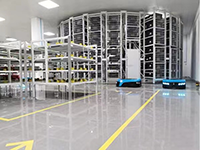
With the development of automation equipment, there are more and more types of automation equipment used in the intelligent three-dimensional library of various enterprises, just take our common RGV, AGV, IGV, these three kinds of intelligent technology equipment that seem to have the same relationship, what is the difference between them and what is the difference in the way of use?
1. Intelligent warehousing equipment RGV
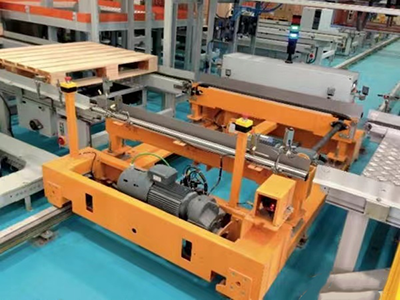
RGV is a "rail guide vehicle", also known as a rail propulsion trolley, which is a contact transport vehicle with the ground track. At present, it is widely used and has the characteristics of fast speed, high reliability and low cost. It can be easily and quickly connected to other intelligent logistics systems, such as access platforms, various buffer stations, conveyor belts, lifts and robots.
2. Intelligent storage equipment AGV
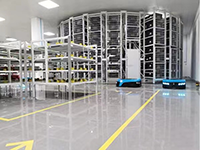
AGV unmanned guided vehicle, also known as automatic guided vehicle, laser guided vehicle. Its distinctive feature is that it is unmanned, and the AGV is equipped with an automatic guidance system, which can ensure that the system can automatically drive along the predetermined route without manual pilotage, and automatically transport goods or materials from the starting point to the destination. Another feature of AGV is good flexibility, high degree of automation and high level of intelligence, the driving path of AGV can be flexibly changed according to the requirements of storage location, production process, etc., and the cost of running path change is very low compared with the traditional conveyor belt and rigid conveyor line. AGVs are generally equipped with loading and unloading mechanisms, which can automatically interface with other logistics equipment to realize the automation of the whole process of cargo and material loading and unloading and handling. In addition, AGV also has the characteristics of clean production, AGV relies on its own battery to provide power, no noise and no pollution during operation, and can be applied in many places that require a clean working environment. The AGV trolley can choose and plan a suitable route according to the outline requirements of the operation task, walk accurately, stop at the designated place, and complete a series of operations, such as picking up the car, unloading, charging, etc. The use of AGV trolleys can not only reduce labor costs, but also make the working environment more efficient and safer.
3. Smart device IGV
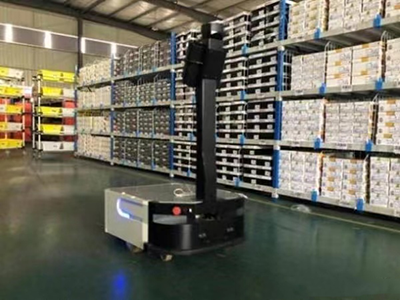
IGV intelligent navigation robot is suitable for material transportation, logistics handling, and inspection of various automated production lines, and can integrate automatic warehousing, MES systems, etc., integrating automatic control, and can realize logistics intelligence in various scenarios. Flexible and fast movement, precise and safe navigation. Make logistics operations more efficient, more convenient, safer and smarter. Keep the logistics channel open and reduce the time occupied by IGV handling. The first-come, first-gone and priority principle was used for traffic control at intersections, avoiding IGV collisions.
Call function: realize station call, abnormal reminder, control the start, stop, reset and so on of the IGV trolley as needed.
Italy scientists develop a new quadruped robot: specially designed for cleaning cigarette butts on the beach
AGV – the terminator of a new era in the 21st century
Related Article