


Maximizing Efficiency: Insights into Planetary Gearbox Performance and Optimization

The planetary gearbox, known for its efficiency and compactness, is a staple in the realm of mechanical transmission systems. Its core structure comprises a set of planetary gears, a sun gear, an internal ring gear, and a stage gear. The power source initiates motion by driving the sun gear, which in turn engages with the planetary gears mounted on the carrier. The carrier is then connected to the output shaft to achieve the desired deceleration effect, with the entire planetary gear assembly rotating around the outer ring gear.
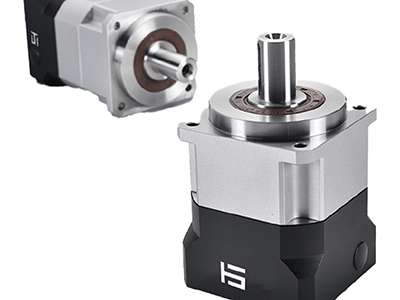
Full-Load Efficiency of Planetary Gearboxes:
The full-load efficiency of a precision planetary gearbox is defined as the gearbox's transmission efficiency when operating under its maximum load. A gearbox with high full-load efficiency not only operates with minimal heat generation but also maintains superior overall performance. This is because it effectively converts input power into output power, minimizing both heat generation and energy loss. In practical applications, a high full-load efficiency ensures that the gearbox can operate reliably and stably under long-term, high-load conditions, which is crucial for applications demanding sustained heavy-duty operation.
Enhancing Work Efficiency:
To enhance the work efficiency of a planetary gearbox, one must start with high-quality gear materials. Gears made from superior materials possess greater load-bearing capacity and better wear resistance, leading to higher overall strength. The strength check of a planetary gearbox typically involves the transmission contact stress between the planetary wheel and the sun gear, as well as the bending stress of these components. The contact stress between the planetary gear and the internal gear is generally where the ring gear fails first, so ensuring the contact stress of the ring gear is a priority to increase the gearbox's load-bearing capacity.
Gear Strength Calculation:
The strength calculation for a planetary gearbox can follow the formulas used for fixed-shaft gear transmissions, taking into account the unique characteristics of the planetary gearbox, such as multiple planetary wheels and their combined rotational and revolutionary motion. Under normal conditions, increasing the speed ratio of a servo planetary gearbox can effectively enhance its load-bearing requirements. Appropriately increasing the width of the gearbox's gears can also improve its load-bearing capacity. Controlling the accuracy and error of the gears is essential, as the strength of the tooth surface is related not only to the gear's accuracy level but also to its manufacturing precision. Even minor errors can lead to increased pressure on the gears.
Selecting the Right Displacement Coefficient:
Choosing the correct displacement coefficient for a planetary gearbox can increase the gear's load-bearing capacity by 20% to 30%.
Performance Indicators:
Other performance indicators of a planetary gearbox include backlash, lubrication method, rated output torque, noise levels, and load capacity. These factors collectively determine the performance and lifespan of the gearbox.
In essence, the efficiency and performance of a planetary gearbox are influenced by a combination of factors, including material quality, design, manufacturing precision, and operational parameters. By optimizing these elements, one can ensure that the gearbox delivers reliable and efficient service in a variety of mechanical transmission applications.
Unlocking the Potential: Cam Indexers and the Role of Servo and Stepper Motors
Comparing Gearbox Technologies: Planetary vs. Cycloidal Pinwheel Systems
Related Article


