


Unlocking the Potential: Cam Indexers and the Role of Servo and Stepper Motors
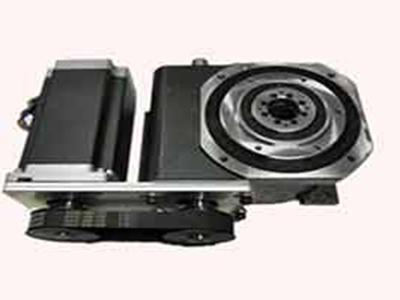
In the field of automation, servo motors and stepper motors are popular for their accuracy and ease of electronic control. However, can these motors improve the accuracy of cam indexers and can they make the entire automation system more accurate? This is a question worth exploring.
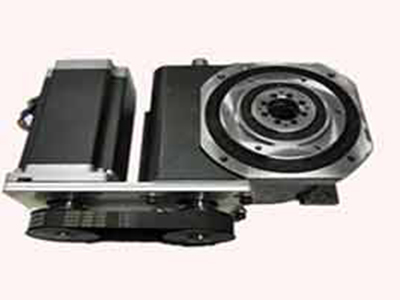
First, we need to understand how servo motors and stepper motors work. Servo motors achieve angle control by controlling the length of pulse time, while stepper motors control the rotation angle by controlling the number of pulses, which corresponds to the step angle. The accuracy of both motors is higher than that of ordinary gear motors, which makes people generally believe that using servo or stepper motors to drive indexers may improve the accuracy of cam indexers, but this view is actually wrong.
The accuracy of cam indexers comes from their special structure of cambered cams. The input cam ribs and output turret rollers of the indexer are mechanically engaged and disengaged, which is a fixed mechanical cycle. The input shaft and input cam rotate continuously, while the output shaft is intermittently output, and the completion of a complete set of mechanical actions is the result of the combination of the fixed mechanical structure and mechanical action of the indexer itself. Therefore, the indexer retains its mechanical characteristics in terms of mechanical movement and mechanical accuracy, and is not affected by any drive source, including station, accuracy, drive angle, etc.
From a cost perspective, using servo motors or stepper motors to drive indexers with intermittent motion may be a bit too luxurious. But if an indexer with a 360-degree drive angle is used, our engineers recommend using both motors. This is because servo motors and stepper motors have unique advantages in providing high-precision positioning, especially in applications that require fast positioning or precise control over a short distance. Stepper motors are ideal for their ability to produce high torque at low speeds and minimize vibration, while servo motors are easy to operate, allowing smooth operation when carrying large inertia loads and belt mechanisms.
In addition, the choice of stepper motors or servo motors should be based on the requirements of the specific application. If the application requires high throughput, high speed and high bandwidth capabilities, or requires high speed with or without tight inter-axis coordination, servo motors are the best choice. If the point-to-point positioning performance and speed requirements are moderate (as a function of process loads and expected disturbances), stepper motors may be a better choice. In addition, the stepper motor's ability to hold position - holding torque when using power and when de-energized - can be an advantage when the load is within reasonable limits.
In summary, the drive source for the indexer can be selected to fully meet the needs of using ordinary gear motors. When considering cost-effectiveness and technical requirements, servo motors and stepper motors provide different solutions to meet specific needs in different application scenarios.
What is the function of a brushless DC motor and what are its uses
Maximizing Efficiency: Insights into Planetary Gearbox Performance and Optimization
Related Article


