


Linear and rotary converters – ball screws
1. What is a ball screw?
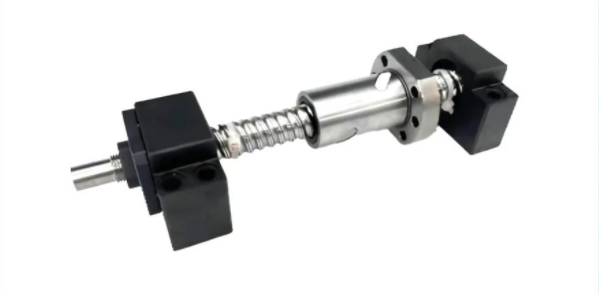
Ball screws are ideal for converting rotary motion into linear motion, or for converting linear motion into rotary motion. It is a transmission element commonly used in tool machinery and precision machinery, and ball screws are widely used in various industrial equipment and precision instruments due to their small friction resistance.
2. the characteristics of ball screws
(1) High mechanical strength and long service life;
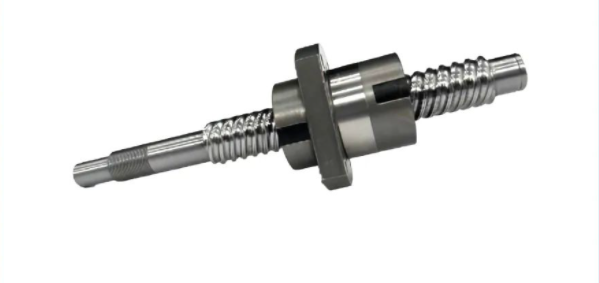
The surface of the raceway after rolling forming makes up for the defects of the internal structure of the metal under the action of strong rolling force, so that the metal fiber is not only not cut, but also more dense, with high mechanical strength and fatigue life.
(2) Better surface finish
The raceway surface is polished to ensure a smooth surface. The finish can reach Ra0.5μm, and it avoids machining defects that cause premature fatigue life, such as "vibration lines", "cracks", "tooth surface burning", and "hard spots" in grinding screw machining.
(3) Small friction loss and high transmission efficiency
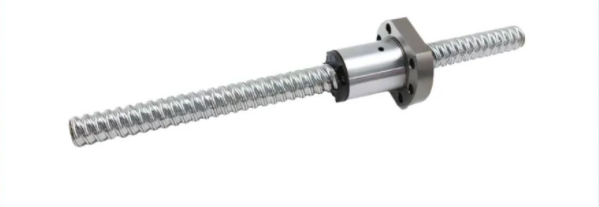
Because there are many balls rolling between the lead screw shaft and the lead screw nut of the ball screw pair, high motion efficiency can be obtained. Compared with the sliding screw pair, the driving torque is less than 1/3, that is, the power required to achieve the same motion result is 1/3 of the sliding screw pair.
(4) It cannot be self-locking and has the reversibility of transmission
3. Types of ball screws
The nut of the ball screw can be divided into bending type, circulator type and end cover type according to the circulation mode of the steel ball.
(1) The elbow type ball screw is also known as the "external circulation" ball screw, the steel ball is introduced along the tooth mouth of the elbow and returns through the elbow to form an infinite circular motion;
(2) The ball return device type is also called the "internal circulation type", the steel ball passes through the high side of the ball return device and returns to the original position of the lead screw shaft;
(3) The size of the end cap nut is smaller than that of the elbow type, and it can be used for multi-head threads. The overall feed rate of the lead screw has been increased, which is suitable for occasions with high feed rate requirements.
|
Circular method |
Dimensions |
Leads |
Nut rigidity |
|
Elbow type |
big |
Small ~ Medium |
high |
|
Circulator type |
small |
small |
low |
|
End cover plate type |
middle |
big |
low |
4. Precautions for ball screw assembly
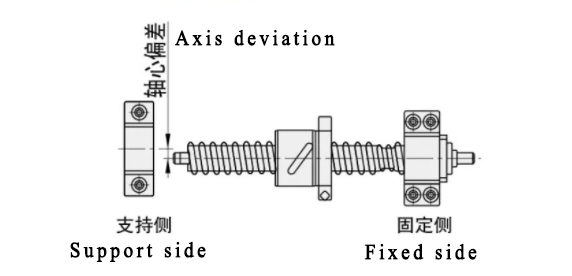
(1) The axial deviation of the lead screw and the screw support assembly, the so-called axial deviation refers to: the axis of the ball screw fixed by the fixed side support assembly and the axis of the bearing of the supporting side support assembly are offset. When using high-precision conditions or using pre-compressed ball screws, please try to control the value to a small value;
(2) Parallel error between the linear guide rail and the ball screw, the parallelism error refers to the tilt of the ball screw in the up and down or left and right directions relative to the datum of the linear guide rail, etc. When using high-precision conditions or using pre-compressed ball screws, please try to control the value to a small value;
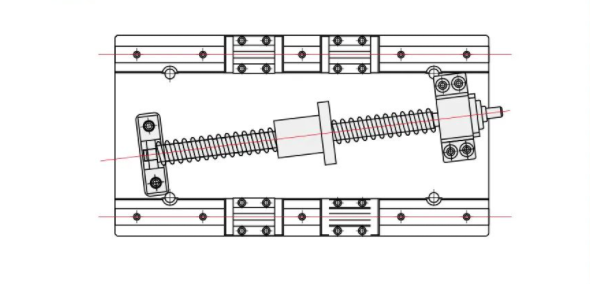
(3) Improper design and machining accuracy of the peripheral parts of the ball screw may lead to axial deviation or tilt. Particular attention is paid to the flatness of the base plate and the dimensional accuracy from the end face of the support assembly to the axis;
(4) The fixing of the workbench and the nut bracket, the fixing of the ball screw nut and the nut bracket.
Ball screw support seat
Classification and characteristics of linear bearings
Related Article


