


What JIS and ISO are and the importance of the "standards" defined by them
People in the manufacturing industry often hear terms like JIS and ISO. This time, I will explain the importance of JIS and ISO, the "basic standards" of Japan and the world, and the "standards" defined by them.
What is a "standard" as defined by JIS and ISO?
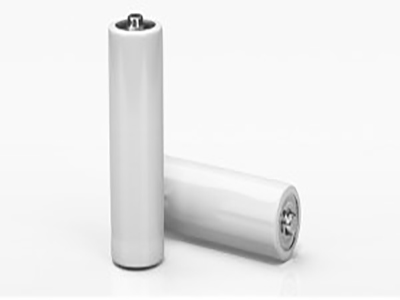
"Standards" can be called "regulations" in other words. Take No. 5 battery, for example. There are many manufacturers that manufacture No. 5 batteries. However, No. 5 batteries can be used in the same way regardless of the manufacturer's manufacture. Even though I used the No. 5 battery from Company A, I had no problem replacing the battery of the remote control with a new battery from Company B. Why? This is because the product called "No. 5 battery" is designed to be a product with a certain basic shape and voltage, regardless of which manufacturer manufactures it. This is the "regulation" and the "standard". No. 5 batteries have a standard for No. 5 batteries, and all manufacturers of No. 5 batteries will comply with this standard. Therefore, no matter which manufacturer's dry battery, we can use it the same. In addition, in the same way, if the dryer safety standards of Company C are different from those of Company D, we will not be able to choose products with confidence. "Standards" apply not only to items that are visible such as size and shape, but also to items that are intangible such as safety standards and program codes. "Standards" will not only make parts and products interchangeable with each other, but also make life and production activities more convenient, make production efficient, and be effectively applied to protect safety and the environment. JIS and ISO are a collection of such standards. Even if a product does not comply with JIS and ISO standards, it does not mean that it cannot be sold. For example, there is the freedom to sell drawing paper in a shape that is not specified in JIS, such as a star or a square, such as a star or a square. On the other hand, laws and ordinances stipulate that "JIS shall be complied with", such as the insulation rate of the cladding wire and the restrictions on the use of hazardous substances. These items cannot be sold if they do not follow the standards.
JIS stands for Japan"Japanese Industrial Standards". This standard was called "Japan Industrial Standard" until July 2019, but it is called "Japan Industrial Standard" as the law is revised. The JIS standard is mainly applicable to products manufactured and sold in Japan, and is revised and revised every five years. JIS corresponding to products and parts is managed by number, and in principle, it is represented by a combination of "JIS + department code + number". For example, in the case of dry cell batteries mentioned above, the details are listed in JIS C 8500. The "C" in "JIS C 8500" is the department code, which refers to the electrical and electronic department, and the number is 8500. If you want to know the JIS standard, please refer to the JIS for the part and product you are handling.
ISO stands for International Organization for Standardization, and is an organization that formulates international standards by compiling national standards and making its own plans. Representatives from various countries came together to define international standards. Thanks to the common standards set by ISO, it is possible to connect telephones and the Internet across borders, and to use electronic components imported from overseas in Japan. The green mark, which is commonly used to indicate "emergency exit", is also set by the ISO standard, so no matter where you go in the world, you can find "emergency exit" with the same mark. There are a number of contents in the ISO that are directly translated into Japanese and used as JIS standards. For example, the quality management system standard ISO9001 is directly translated into Japanese and used as JIS Q 9001.
"Standards" are "regulations", which are indispensable in making parts compatible and improving production efficiency. JIS is the one that summarizes Japan domestic standards, and ISO that summarizes international standards.
The development trend of artificial intelligence in intelligent manufacturing
What is the most critical "datum" when reading and drawing drawings?
Related Article


