


Classification and characteristics of linear bearings
1.What is a linear bearing
A linear bearing is a linear motion system, usually used in conjunction with a guide shaft, that uses the rolling motion of the balls to achieve linear motion.
Due to the contact between the load-bearing ball and the bearing jacket point, the steel ball rolls with very little frictional resistance, resulting in a smooth movement with high precision.
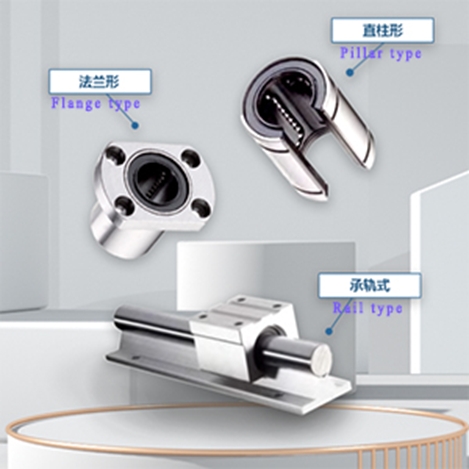
2. Linear bearing features
Built-in ball circulation track for linear motion with unlimited strokes
The ball is in contact with the shaft point to achieve low friction and low loss
A variety of exterior designs can cope with different scenarios and needs
High vibration and noise during high-speed movement
3. Product Introduction
Straight cylindrical linear bearings
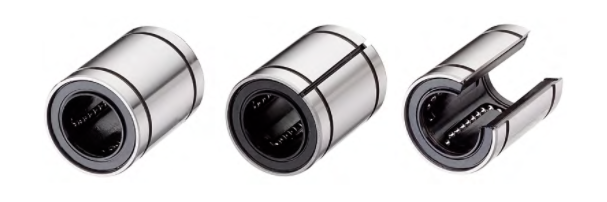
Product features: the most conventional type, widely used. The clearance adjustment type is the same size as the standard type, but there is a gap in the bearing, which can be used in conjunction with a support with an adjustable inner diameter to adjust the clearance between the smooth shaft and the linear bearing. Compared with the standard type, the opening type is equivalent to removing a row of steel balls, and can be used in conjunction with the guide shaft with support to avoid the deflection of the optical axis.
Flanged linear bearings
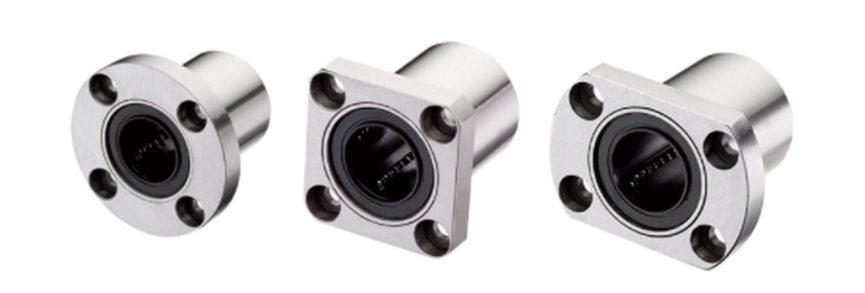
Product features: The integrated structure of bearing sleeve and flange has strong ability to withstand shock and vibration, and is easy to connect and use; Among them, the center height of the flange is lower than that of the round flange, which is more suitable for compact installation
Box-type linear bearings
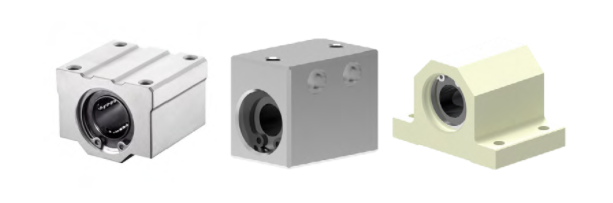
Product features: It is used in conjunction with the shell cut from aluminum profiles, and the shell and shell mounting holes support non-standard customization; The flanged type can reduce the man-hours of making the seat and assembling the linear bearing, and the shaft height can be selected
4. Precautions for installation
(1) When the linear bearing bears a large moment load (eccentric load), a single single lining type is not applicable, and it is recommended to use a double lining or multiple single lining type.
(2) The linear bearing is not suitable for rotational motion in structure, if it is forced to rotate, it may cause damage to the product, please pay attention to use.
(3) Linear bearings are not suitable for repeated plugging and unplugging.
(4) When inserting the guide shaft into the linear bearing, please align the center and insert it slowly, otherwise it will cause the ball to fall off or the retainer to be deformed.
Linear and rotary converters – ball screws
An article to understand polyurethane rubber bearings
Related Article


