


Machine Vision
Machine vision doesn't possess the visual comprehension abilities of humans. Essentially, it's an engineering application of image processing technology. Its operations rely entirely on algorithms and optical hardware developed by engineers, designed to perform specific tasks with no general applicability between different tasks.
Some people claim that machine intelligence has surpassed human intelligence, but this is overly optimistic. Current technology is far from reaching that level. Machine vision today can only address tasks that are simple and well-defined, relying on existing mathematical models, such as shape matching, edge detection, and texture recognition.
If the object being inspected lacks clear patterns, developing an effective vision system becomes impossible. Humans can easily recognize specific objects, like buttons or gloves, within complex patterns because of their autonomous consciousness and understanding of tasks. However, machines cannot do this because, without discernible patterns, engineers struggle to find effective features to develop the system.
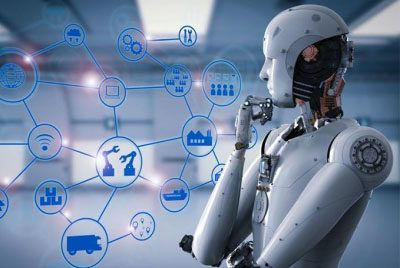
Advantages of Machine Vision
Despite its limitations, machine vision has its strengths. It excels at tirelessly inspecting simple items with high accuracy, such as detecting scratches on glass or defects on screens, and can achieve high precision.
The core of machine vision is to use machines to replace human eyes in measurement and judgment. In practical applications, it is mainly used for system integration or secondary development, which can be broadly categorized into the following four areas:
1. Appearance Defect Inspection
This involves the inspection of appearance and defects, primarily through template matching.
2. Recognition
This includes biometric recognition (such as face, voice, fingerprint, iris), target recognition (such as license plate recognition, RFID), barcode recognition (1D and 2D), character recognition, texture recognition, etc. The ultimate goal of recognition is classification, which often requires training and learning models through big data and deep learning.
3. Dimensional Measurement
This includes geometric measurements (such as length, width, height, perimeter, area, volume) and measurements of circles or ellipses (such as center, radius, contour, angle, dimensions). Calibration of the camera is necessary before measurement.
4. Positioning
Used in tooling positioning, assembly, and robot palletizing. Machine vision systems can quickly acquire large amounts of information, which can be easily processed automatically and integrated with design and manufacturing control information. Consequently, machine vision systems are widely used in modern automated production for condition monitoring, product inspection, and quality control.
The Current State of Artificial Intelligence
Current artificial intelligence technology has only managed to discover methods for automatically extracting patterns, collecting large, representative samples, and then applying these systems to image classification. Strictly speaking, this isn't true intelligence but rather a form of technology that still falls within the realm of Turing machines. The limitations of current machine vision and artificial intelligence leave room for further research by scientists, as well as master's and doctoral students.
Sensors in Shared Bikes and Unmanned Supermarkets
Ball screw support seat
Related Article


