


How Does an AC Motor Work
2025-05-31
How Does an AC Motor Work? Unveiling the Mechanisms of Rotation
In the world of electrical engineering and industrial applications, alternating current (AC) motors are omnipresent, powering everything from household appliances to large - scale manufacturing machinery. Understanding how an AC motor works is crucial for engineers, technicians, and enthusiasts alike. This blog post will provide a detailed exploration of the working principles, components, and operation of AC motors.
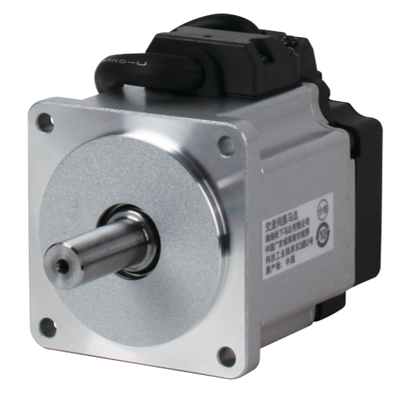
Introduction to AC Motors
What is an AC Motor?
An AC motor is an electrical machine that converts alternating current electrical energy into mechanical energy. Unlike direct current (DC) motors, which rely on a constant - direction current, AC motors utilize the changing direction of alternating current to generate rotational motion. AC motors are highly efficient, reliable, and versatile, making them the preferred choice for a wide range of applications.
Types of AC Motors
There are two main types of AC motors: induction motors and synchronous motors. Induction motors, also known as asynchronous motors, are the most commonly used type due to their simplicity, robustness, and cost - effectiveness. Synchronous motors, on the other hand, operate at a constant speed that is synchronized with the frequency of the power supply and are often used in applications requiring precise speed control.
The Fundamental Working Principle of AC Motors
Generation of Rotating Magnetic Field
The key to understanding how an AC motor works lies in the generation of a rotating magnetic field. When three - phase alternating current is supplied to the stator windings of an AC motor, it creates a magnetic field that rotates in space. The three - phase currents are out of phase with each other by 120 degrees. As the currents in the stator windings change sinusoidally, the magnetic field produced by each winding also changes. The combined effect of these three magnetic fields results in a rotating magnetic field with a constant magnitude and a speed that is determined by the frequency of the power supply and the number of poles in the motor. The synchronous speed (\(N_s\)) of the rotating magnetic field can be calculated using the formula \(N_s=\frac{120f}{P}\), where \(f\) is the frequency of the power supply in hertz and \(P\) is the number of poles.
Interaction with the Rotor
The rotating magnetic field in the stator induces an electromotive force (EMF) in the rotor windings. In an induction motor, the rotor can be either a squirrel - cage type or a wound - rotor type. In a squirrel - cage rotor, which consists of conductive bars short - circuited at both ends, the induced EMF causes currents to flow in the bars. These currents, in turn, create their own magnetic field. According to Lenz's law, the magnetic field of the rotor interacts with the rotating magnetic field of the stator, and the resulting electromagnetic forces cause the rotor to rotate in the same direction as the rotating magnetic field. In a wound - rotor induction motor, the rotor windings are connected to external resistors. By varying the resistance, the starting torque and speed of the motor can be controlled.
In a synchronous motor, the rotor is usually a permanent magnet or an electromagnet. The rotor magnetic field locks onto the rotating magnetic field of the stator, and the rotor rotates at the same speed as the rotating magnetic field (synchronous speed). The excitation current in the rotor of an electromagnet - based synchronous motor can be adjusted to control the power factor of the motor.
Speed Control of AC Motors
Variable Frequency Drives (VFDs)
One of the most common methods for controlling the speed of an AC motor is by using Variable Frequency Drives (VFDs). A VFD changes the frequency and voltage supplied to the motor. Since the synchronous speed of an AC motor is directly proportional to the frequency of the power supply, by varying the frequency, the speed of the motor can be adjusted. VFDs also provide soft - starting capabilities, reducing the inrush current when the motor starts and minimizing mechanical stress on the motor and connected equipment.
Pole Changing
Another method for speed control in some AC motors is pole changing. By changing the number of poles in the motor, the synchronous speed can be altered. This is achieved by using multiple sets of stator windings that can be reconfigured to have different numbers of poles. However, pole - changing motors are typically limited to a few discrete speed settings.
In conclusion, AC motors operate based on the generation of a rotating magnetic field in the stator and the interaction of this field with the rotor. Their reliable and efficient operation, along with the availability of various speed - control methods, has made them an integral part of modern electrical and mechanical systems. Whether it's powering a simple fan or a complex industrial production line, understanding how AC motors work helps in optimizing their performance and application.
How Does an AC Electric Motor Work
What is a DC Motor
Related Article

Brushless DC (BLDC) motors are widely used in EVs, drones, industrial machinery, and robotics for their efficiency and long lifespan. Unlike brushed motors—where reversing direction only requires swapping power leads—BLDC motors rely on electronic commutation, making direction reversal more nuanced.
How to Reverse Direction in Brushless Motors

Brushed and brushless DC motors are two of the most common electric motor designs, powering everything from toys to electric vehicles. While both convert electrical energy to mechanical motion, their internal structures, performance, and use cases differ drastically.
What’s the Difference Between a Brushed and Brushless Motor

Brushed DC motors are reliable, but wear and tear over time can lead to failure. Whether you’re troubleshooting a power tool, household appliance, or industrial conveyor motor, knowing the signs of a bad brushed motor saves time and prevents further damage.
How to Know If a Brushed Motor Is Bad
