


What is a Brushed DC Motor
2025-06-18
What is a Brushed DC Motor?
In the realm of electric motors, the brushed DC motor stands as a fundamental and widely - used device. Despite the rise of more modern motor technologies, brushed DC motors continue to play a crucial role in numerous applications due to their simplicity, affordability, and reliable performance. This blog post will delve deep into what a brushed DC motor is, exploring its structure, working principles, advantages, applications, limitations, and future prospects.
Defining the Brushed DC Motor
A brushed DC motor is an electric motor that operates on direct current (DC) power and uses a mechanical commutation system with brushes to convert electrical energy into mechanical energy. It is one of the oldest and most well - understood types of electric motors. The key characteristic of a brushed DC motor is the presence of brushes, which are typically made of carbon or graphite, and a commutator, a cylindrical split - ring device. These components work in tandem to reverse the direction of current flow in the motor's armature windings as the motor rotates, enabling continuous rotation.
Brushed DC motors are known for their straightforward design and ease of control. They can be easily integrated into various systems, making them a popular choice for both simple and complex applications across different industries.
Structure of a Brushed DC Motor
Stator
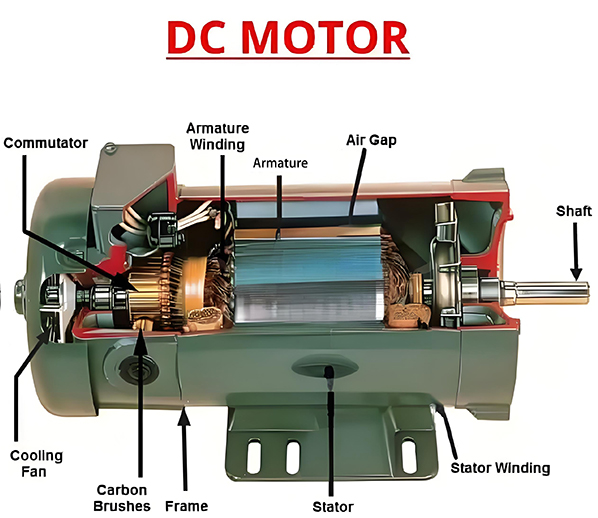
The stator is the stationary part of the brushed DC motor. Its primary function is to generate a magnetic field. In most brushed DC motors, the stator consists of permanent magnets or electromagnets. When permanent magnets are used, they are typically made of materials such as ceramic or neodymium - iron - boron (NdFeB) and are arranged to create a fixed magnetic field within the motor housing. In the case of electromagnets, the stator windings are energized with an electric current to produce the magnetic field. The strength and configuration of the stator's magnetic field have a significant impact on the motor's performance, including its torque and speed characteristics.
Armature (Rotor)
The armature, also known as the rotor, is the rotating part of the motor. It consists of a core made of laminated iron sheets to reduce eddy current losses. Wrapped around the armature core are the armature windings, which are coils of insulated wire. These windings are connected to the commutator. When an electric current flows through the armature windings, it interacts with the magnetic field generated by the stator, creating a force that causes the armature to rotate. The number of windings, their arrangement, and the gauge of the wire used all contribute to the motor's overall performance and power - handling capabilities.
Commutator
The commutator is a critical component of the brushed DC motor. It is a cylindrical device divided into segments, usually made of copper. Each segment of the commutator is connected to one end of an armature winding. As the armature rotates, the commutator segments come into contact with the brushes in a specific sequence. This contact allows the current to flow through the armature windings in the correct direction, ensuring that the magnetic forces acting on the armature are continuously in a direction that promotes rotation. The commutator's design and quality are essential for the smooth operation of the motor, as any irregularities can lead to electrical arcing, increased wear, and reduced performance.
Brushes
The brushes are responsible for making electrical contact with the commutator. They are usually spring - loaded to maintain consistent pressure against the commutator segments as the motor rotates. As the commutator spins, the brushes slide over the segments, transferring electrical current from the power source to the armature windings. Over time, the brushes can wear out due to friction and electrical arcing, which is one of the main maintenance concerns associated with brushed DC motors. However, their simple design makes them relatively easy and inexpensive to replace.
Working Principles of a Brushed DC Motor
The operation of a brushed DC motor is based on the principle of electromagnetic interaction. When a direct current is supplied to the motor, the current flows through the brushes and into the commutator segments. From there, it enters the armature windings. According to Fleming's left - hand rule, when an electric current - carrying conductor (the armature windings) is placed in a magnetic field (generated by the stator), a force is exerted on the conductor. This force causes the armature to rotate.
As the armature rotates, the commutator segments change their position relative to the brushes. When a particular commutator segment moves out of contact with one brush and comes into contact with the other, the direction of current flow through the corresponding armature winding is reversed. This reversal of current ensures that the magnetic forces acting on the armature continue to act in a direction that promotes continuous rotation. The speed of the motor can be controlled by adjusting the voltage supplied to the motor. Increasing the voltage increases the current flowing through the armature windings, which in turn increases the torque and speed of the motor, while decreasing the voltage has the opposite effect.
Advantages of Brushed DC Motors
Simplicity and Ease of Use
One of the most significant advantages of brushed DC motors is their simplicity. Their basic design and straightforward operation make them easy to understand, control, and integrate into various systems. Even for those with limited knowledge of electrical engineering, it is relatively easy to set up and operate a brushed DC motor. They can be controlled using simple circuits, such as a potentiometer for speed control or a simple switch for on - off operation.
Affordability
Brushed DC motors are generally more affordable compared to other types of electric motors, such as brushless DC motors or AC motors. This cost - effectiveness makes them an attractive option for applications where budget constraints are a concern, especially in low - volume production or hobbyist projects. The relatively low cost of production, along with the ease of manufacturing and availability of components, contributes to their affordability.
High Torque at Low Speeds
Brushed DC motors are capable of producing high torque at low speeds. This characteristic makes them suitable for applications that require a significant amount of starting force, such as in small robotic vehicles, electric door locks, and some types of small - scale industrial machinery. The ability to provide high torque from a standstill allows these motors to quickly accelerate loads without the need for complex gearing systems in some cases.
Wide Range of Sizes and Power Ratings
Brushed DC motors are available in a vast range of sizes, from tiny motors used in toys and small electronic devices to large - scale motors used in industrial applications. Similarly, they come with a wide variety of power ratings, enabling users to select the motor that best suits their specific application requirements. This versatility in size and power makes brushed DC motors applicable in numerous fields, from consumer electronics to industrial automation.
Applications of Brushed DC Motors
Consumer Electronics
In the consumer electronics industry, brushed DC motors are widely used in a variety of devices. They can be found in electric toothbrushes, where their simple control and compact size make them ideal for providing the necessary vibration or rotation. In small fans, such as computer case fans or desk fans, brushed DC motors offer an affordable and reliable solution for generating airflow. Additionally, many toys, especially remote - controlled vehicles and robotic toys, rely on brushed DC motors for their movement due to their ease of use and cost - effectiveness.
Home Appliances
Several home appliances utilize brushed DC motors. For example, in older - model vacuum cleaners, brushed DC motors are used to drive the suction fan and the brush roll, providing the necessary power for cleaning. Some small - scale kitchen appliances, such as hand - held blenders and mixers, also use brushed DC motors to rotate the blades at high speeds. These motors are able to meet the power and speed requirements of these appliances while remaining cost - effective for mass production.
Small - Scale Industrial Applications
In small - scale industrial settings, brushed DC motors are commonly used in applications such as conveyor belts for light - duty material handling, small - scale manufacturing equipment, and automated assembly lines. Their ability to provide high torque at low speeds and their ease of control make them suitable for these types of applications, where precise control over speed and direction may not be as critical as in more complex industrial processes.
Hobbyist and DIY Projects
Brushed DC motors are extremely popular among hobbyists and DIY enthusiasts. Their affordability, simplicity, and wide availability make them the go - to choice for a variety of projects, such as building homemade robots, model airplanes, and small - scale electric vehicles. Hobbyists can easily experiment with different control methods and configurations, learning about electrical engineering and motor control in the process.
Limitations of Brushed DC Motors
Limited Lifespan
The brushes in a brushed DC motor are subject to wear and tear over time due to friction and electrical arcing. As the brushes wear down, they can cause electrical contact problems, leading to reduced performance, increased noise, and eventually motor failure. The lifespan of a brushed DC motor is often limited by the lifespan of its brushes, which typically need to be replaced periodically. This maintenance requirement can be a drawback, especially in applications where continuous and reliable operation is essential.
Electromagnetic Interference (EMI)
The electrical arcing that occurs when the brushes make and break contact with the commutator segments generates electromagnetic interference. This EMI can disrupt the operation of nearby electronic devices, such as radios, televisions, and sensitive measurement equipment. In applications where electromagnetic compatibility (EMC) is a concern, additional measures, such as the use of EMI filters, need to be taken to mitigate the effects of the interference, adding to the overall cost and complexity of the system.
Lower Efficiency
Compared to brushless DC motors, brushed DC motors generally have lower efficiency. The energy losses in brushed DC motors are mainly due to friction in the brushes and commutator, as well as electrical losses caused by arcing. These losses result in more heat generation, which not only reduces the overall efficiency of the motor but also requires additional cooling measures in some cases.
Future of Brushed DC Motors
While the development of more advanced motor technologies, such as brushless DC motors, has posed a challenge to the dominance of brushed DC motors in some applications, brushed DC motors still have a place in the future. Their simplicity and affordability will continue to make them attractive for low - cost, low - performance applications. Additionally, research efforts are focused on improving the lifespan and performance of brushed DC motors. For example, new brush materials with better wear resistance and reduced arcing are being developed, and advanced commutator designs are being explored to minimize EMI and improve overall efficiency. In niche applications where the unique characteristics of brushed DC motors, such as high torque at low speeds and ease of control, are highly valued, they are likely to remain in use for the foreseeable future.
In conclusion, brushed DC motors are a classic and important type of electric motor. Understanding their structure, working principles, advantages, applications, and limitations is crucial for anyone involved in electrical engineering, product design, or simply interested in the world of electric motors. Whether in consumer electronics, home appliances, small - scale industries, or hobbyist projects, brushed DC motors continue to play an essential role, and their future, although evolving, remains relevant in many areas.
How Do Brushless DC Motors Work
How to Test a DC Motor
Related Article

Brushless DC (BLDC) motors are widely used in EVs, drones, industrial machinery, and robotics for their efficiency and long lifespan. Unlike brushed motors—where reversing direction only requires swapping power leads—BLDC motors rely on electronic commutation, making direction reversal more nuanced.
How to Reverse Direction in Brushless Motors

Brushed and brushless DC motors are two of the most common electric motor designs, powering everything from toys to electric vehicles. While both convert electrical energy to mechanical motion, their internal structures, performance, and use cases differ drastically.
What’s the Difference Between a Brushed and Brushless Motor

Brushed DC motors are reliable, but wear and tear over time can lead to failure. Whether you’re troubleshooting a power tool, household appliance, or industrial conveyor motor, knowing the signs of a bad brushed motor saves time and prevents further damage.
How to Know If a Brushed Motor Is Bad
