


What is a PLC Controller
2025-05-28
What is a PLC Controller? A Comprehensive Guide
In the realm of industrial automation, Programmable Logic Controllers (PLCs) stand as a cornerstone technology, revolutionizing the way manufacturing processes are managed and executed. If you've ever wondered, “What is a PLC controller?”, this blog post will take you through its definition, working principles, applications, and significance in modern industries.
Understanding the Basics of a PLC Controller
Definition and Origins
A Programmable Logic Controller is an industrial computer designed to automate electromechanical processes. It can be programmed to perform a wide range of tasks, such as controlling machinery on factory assembly lines, amusement park rides, or light fixtures in large buildings. PLCs were developed as a replacement for hard-wired relay control panels. In the past, changing the logic of a control system meant physically rewiring the relays, which was time-consuming, costly, and prone to errors. The first PLC, developed by Modicon (now Schneider Electric) in 1968, was designed to meet the needs of General Motors' automotive manufacturing plants, offering a more flexible and reliable alternative.
Key Components
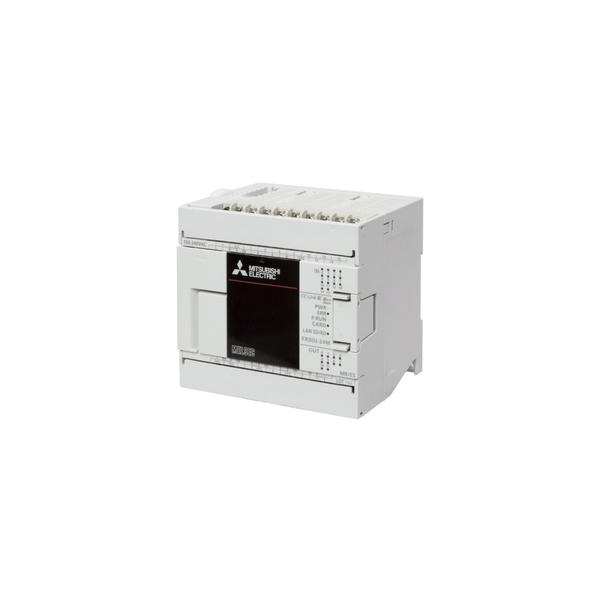
A typical PLC consists of three main components. The Central Processing Unit (CPU) is the brain of the PLC, executing the user-programmed instructions, performing arithmetic operations, and making logical decisions. The Input/Output (I/O) modules act as the interface between the PLC and the external world. Input modules receive signals from sensors, switches, and other devices, while output modules send control signals to actuators like motors, solenoid valves, and lights. Finally, the Memory stores the user program, system configuration data, and the status of input and output devices.
How Does a PLC Controller Work?
Programming Languages
PLCs can be programmed using several languages. Ladder Logic, the most commonly used language, resembles electrical ladder diagrams, making it intuitive for electrical engineers and technicians. It uses symbols for contacts, coils, and other electrical components to represent logical operations. Structured Text is a text-based language similar to Pascal, which is suitable for complex calculations and data handling. Other languages include Function Block Diagram (FBD), which uses graphical blocks to represent functions, and Instruction List (IL), a low-level text-based language similar to assembly code.
Scanning Process
PLCs operate on a cyclic scanning process. First, during the Input Scan phase, the PLC reads the status of all input devices connected to its input modules and stores this information in its memory. Then, in the Program Execution phase, the CPU executes the user program instructions sequentially, using the input data and any internal memory values to make decisions and calculate output values. Finally, in the Output Scan phase, the PLC writes the calculated output values to the output modules, which then control the connected external devices. This cycle repeats continuously, allowing the PLC to respond to changes in the input conditions in real-time.
Applications of PLC Controllers
Manufacturing Industry
In manufacturing, PLCs are used extensively to control production lines. They can manage the movement of conveyor belts, control robotic arms for assembly tasks, and monitor the quality of products through sensors. For example, in a food processing plant, a PLC can control the filling and capping of bottles, ensuring accurate volumes and proper sealing.
Building Automation
PLCs play a crucial role in building automation systems. They can control heating, ventilation, and air conditioning (HVAC) systems, adjusting temperature and humidity based on sensor readings. Additionally, PLCs manage lighting systems, turning lights on and off or adjusting their brightness according to occupancy and daylight levels, helping to save energy.
Transportation
In the transportation sector, PLCs are used in traffic light control systems. They can be programmed to adjust the timing of traffic lights based on traffic flow data from sensors, optimizing traffic flow and reducing congestion. PLCs are also found in railway signaling systems, ensuring safe and efficient train operations.
The Future of PLC Controllers
As technology advances, PLCs are evolving to meet new challenges. The integration of Internet of Things (IoT) capabilities is becoming increasingly common, allowing PLCs to connect to the cloud and share data in real-time. This enables remote monitoring and predictive maintenance, reducing downtime and increasing efficiency. Moreover, the adoption of artificial intelligence and machine learning algorithms within PLCs could further enhance their decision-making abilities, leading to more autonomous and intelligent control systems in the future.
In conclusion, Programmable Logic Controllers are indispensable in modern industrial automation. Their flexibility, reliability, and ease of programming have made them a go-to solution for a wide range of applications. As industries continue to automate and digitize, the role of PLCs will only become more significant.
Why Is the AC Motor So Important
What is Factory Automation
Related Article

Brushless DC (BLDC) motors are widely used in EVs, drones, industrial machinery, and robotics for their efficiency and long lifespan. Unlike brushed motors—where reversing direction only requires swapping power leads—BLDC motors rely on electronic commutation, making direction reversal more nuanced.
How to Reverse Direction in Brushless Motors

Brushed and brushless DC motors are two of the most common electric motor designs, powering everything from toys to electric vehicles. While both convert electrical energy to mechanical motion, their internal structures, performance, and use cases differ drastically.
What’s the Difference Between a Brushed and Brushless Motor

Brushed DC motors are reliable, but wear and tear over time can lead to failure. Whether you’re troubleshooting a power tool, household appliance, or industrial conveyor motor, knowing the signs of a bad brushed motor saves time and prevents further damage.
How to Know If a Brushed Motor Is Bad
