


What Is a Proximity Sensor
2025-07-10
What Is a Proximity Sensor?
In the era of automation and smart technology, the ability to detect objects without physical contact has become a cornerstone of modern engineering. Proximity sensors are the unsung heroes behind this capability, enabling machines, devices, and systems to interact with their environment in real time. From industrial assembly lines to smartphones and automotive systems, these sensors play a pivotal role in enhancing efficiency, safety, and functionality. This blog explores what a proximity sensor is, how it works, its types, technical specifications, applications, and more.
Defining Proximity Sensors
A proximity sensor is a type of electronic device designed to detect the presence or absence of an object within a certain range without requiring physical contact. Unlike tactile sensors that rely on touch, proximity sensors use various physical phenomena—such as electromagnetic fields, light, sound waves, or infrared radiation—to sense nearby objects. This non-contact detection makes them ideal for environments where wear and tear, contamination, or precision are critical concerns.
The core functionality of a proximity sensor involves three key steps:
- Emitting a signal (e.g., electromagnetic waves, light, or sound).
- Detecting changes in the signal caused by the presence of an object.
- Converting these changes into an electrical output (e.g., digital on/off signal or analog voltage) that can be interpreted by a control system.
How Proximity Sensors Work: Fundamental Principles
While the specific operating mechanism varies by sensor type, all proximity sensors follow a basic principle: they generate a field or signal and monitor disturbances to that field caused by a target object. Here’s a breakdown of the general workflow:
- Transmission: The sensor emits a form of energy (e.g., radio waves, infrared light, or ultrasonic waves) into its surrounding area.
- Interaction: If an object enters the sensor’s detection range, it interacts with the emitted energy—reflecting, absorbing, or altering it.
- Reception: A receiver within the sensor detects the modified energy.
- Processing: The sensor’s circuitry analyzes the received signal to determine if an object is present.
- Output: The sensor produces an electrical signal (typically digital, such as 0V for "no object" and 5V for "object detected") to communicate the result to a controller or system.
This process occurs in milliseconds or microseconds, allowing for real-time responsiveness—a critical feature in high-speed automation.
Types of Proximity Sensors and Their Technical Specifications
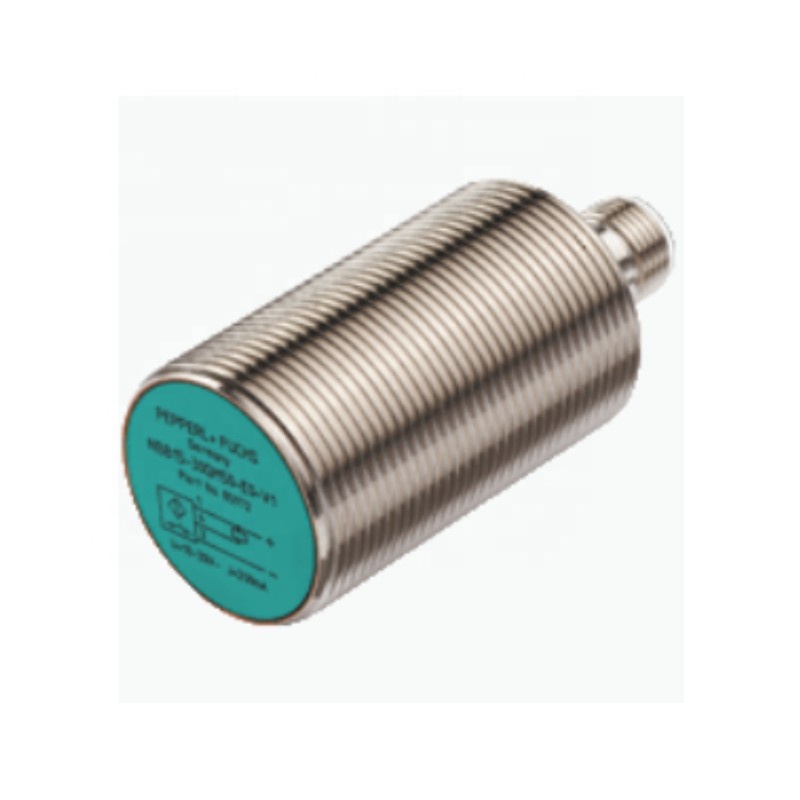
Proximity sensors are categorized based on the technology they use to detect objects. Each type has unique strengths, limitations, and technical parameters, making them suitable for specific applications. Below are the most common types, along with their key technical data (current as of 2025):
Inductive Proximity Sensors
Inductive sensors detect metallic objects by generating an alternating electromagnetic field. When a metal target enters this field, it induces eddy currents, which disrupt the field—triggering a detection signal.
- Detection Range: Typically 1mm to 50mm (varies by model; e.g., Omron E2E-X10D1 has a range of 10mm).
- Response Time: <1ms (e.g., Sick IM18-05BPS-ZW1 responds in 0.5ms).
- Target Material: Exclusively metals (ferrous metals like steel have longer detection ranges than non-ferrous metals like aluminum).
- Operating Temperature: -25°C to 70°C (industrial-grade models, such as Banner Q23 Series, extend to -40°C to 85°C).
- Protection Rating: IP67 to IP69K (resistant to dust, water, and high-pressure washing).
- Power Consumption: 10-30mA at 12-24V DC (typical for NPN/PNP output models).
Capacitive Proximity Sensors
Capacitive sensors detect both metallic and non-metallic objects (e.g., plastics, liquids, glass) by measuring changes in capacitance. They create an electrostatic field, and a target object alters the capacitance between the sensor’s electrode and ground.
- Detection Range: 1mm to 100mm (e.g., Pepperl+Fuchs CBN15-30GS60-E2 has a range of 30mm for non-metals).
- Response Time: 1-5ms (e.g., Turck BC10-S30-AP6X has a response time of 2ms).
- Target Compatibility: Non-metals, metals, liquids, and granular materials.
- Environmental Resistance: Resistant to moisture and dust (IP67); some models (e.g., Balluff BCS M18M1) offer IP69K for harsh industrial environments.
- Sensitivity Adjustment: Many models allow calibration to ignore background objects (e.g., adjusting for a container wall while detecting liquid inside).
Photoelectric Proximity Sensors
Photoelectric sensors use light (visible, infrared, or laser) to detect objects. They consist of a light emitter and a receiver, and detection occurs when an object blocks or reflects the light beam.
Subtypes:
- Through-Beam: Emitter and receiver are separate; an object blocks the beam. Detection range: up to 100m (e.g., Keyence LR-ZB250C3 has a range of 250m).
- Retroreflective: Emitter and receiver are in one unit; light reflects off a mirror. Range: up to 10m (e.g., Banner R58ECR-1000Q has a 10m range).
- Diffuse Reflective: Emitter and receiver are in one unit; light reflects off the object itself. Range: 10mm to 300mm (e.g., Banner Q4X has a 300mm range with 0.1mm resolution).
- Response Time: 50µs to 1ms (e.g., Omron E3Z Series has a 150µs response time).
- Light Source: Infrared (most common, 850nm wavelength) or laser (650nm for high precision).
- Environmental Tolerance: Susceptible to dust, fog, or ambient light; some models (e.g., Sick W12-3) include anti-glare filters.
Ultrasonic Proximity Sensors
Ultrasonic sensors emit high-frequency sound waves (20kHz to 200kHz) and measure the time it takes for the waves to reflect off a target and return. They work with most materials, including transparent objects (e.g., glass).
- Detection Range: 20mm to 10m (e.g., MaxBotix MB7092 has a range of 300mm to 5m).
- Accuracy: ±1% of the measured distance (e.g., Pepperl+Fuchs UC4000-30GM-IUR2-V15 has ±0.3% accuracy).
- Response Time: 50ms to 100ms (slower than photoelectric sensors due to sound wave travel time).
- Target Compatibility: Virtually all materials (solids, liquids, gases) except soft, sound-absorbing surfaces (e.g., foam).
- Temperature Impact: Performance varies with temperature (compensated in advanced models like Banner T30UX).
Magnetic Proximity Sensors
Magnetic sensors (reed switches or Hall-effect sensors) detect magnetic fields, typically from permanent magnets attached to targets. Hall-effect sensors are solid-state and more durable than reed switches.
- Detection Range: 1mm to 50mm (e.g., Honeywell SS49E Hall-effect sensor detects fields up to 50mm).
- Response Time: <1µs (Hall-effect sensors) to 10ms (reed switches).
- Applications: Door position in appliances, linear motion tracking (e.g., in CNC machines).
- Environmental Resistance: Hall-effect sensors offer IP67 protection; reed switches are less robust.
Key Technical Parameters to Consider
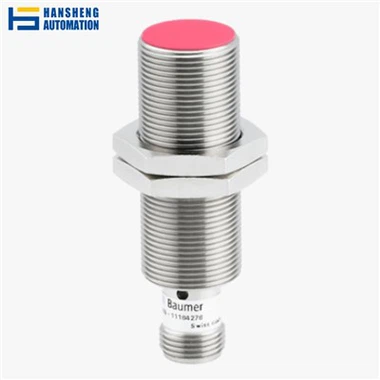
When selecting a proximity sensor, several technical specifications are critical to ensure compatibility with the application:
- Detection Range: The maximum distance at which the sensor can reliably detect a target. This varies by sensor type and target material (e.g., inductive sensors have shorter ranges for aluminum than steel).
- Repeatability: The consistency of detection at the same distance (e.g., ±0.01mm for high-precision laser sensors).
- Hysteresis: The difference between the detection and release points (prevents rapid switching; typically 10-20% of the detection range).
- Output Type: Digital (NPN/PNP, NO/NC) or analog (voltage/current proportional to distance, e.g., 4-20mA).
- Power Supply: Most industrial sensors use 12-24V DC; some consumer models use 5V DC.
- Environmental Ratings: IP (Ingress Protection) for dust/water resistance; IK for impact resistance.
Real-World Applications
Proximity sensors are ubiquitous across industries, thanks to their versatility. Here are key applications with technical examples:
Industrial Automation
- Conveyor Systems: Inductive sensors (e.g., Omron E2E) detect metal parts on conveyors, triggering sorting mechanisms. A typical setup uses a 10mm-range sensor with a 1ms response time to handle 100 parts per minute.
- Robotics: Collaborative robots (cobots) use capacitive sensors (e.g., Pepperl+Fuchs CBN) to detect human hands within 50mm, stopping motion to prevent injury.
Consumer Electronics
- Smartphones: Infrared proximity sensors (e.g., Broadcom APDS-9960) detect when the phone is near the user’s ear, dimming the screen to save power. Detection range: 5-10cm, response time: <10ms.
- Appliances: Washing machines use magnetic sensors to detect door closure (reed switches with 2mm detection range).
Automotive
- Parking Assistance: Ultrasonic sensors (e.g., Bosch PAA) in bumpers detect obstacles up to 2m away with ±1cm accuracy, alerting drivers via beeps. Modern cars use 4-8 such sensors.
- Engine Control: Hall-effect sensors monitor crankshaft position, with <1µs response time to synchronize fuel injection.
Healthcare
- Medical Devices: Capacitive sensors detect liquid levels in IV bags (range: 5mm) without piercing the bag, ensuring sterility.
- Wheelchairs: Proximity sensors (ultrasonic or photoelectric) detect obstacles, triggering automatic braking to prevent collisions.
Advantages and Limitations
Advantages
- Non-Contact Operation: Eliminates wear and tear, extending sensor life (up to 100 million cycles for inductive sensors).
- High Speed: Fast response times (microseconds for photoelectric, milliseconds for ultrasonic) enable real-time control.
- Versatility: Different types handle diverse targets (metals, liquids, glass) and environments.
- Reliability: Industrial models withstand extreme temperatures, vibration, and moisture (IP69K rated sensors endure high-pressure, high-temperature washes).
Limitations
- Environmental Sensitivity: Photoelectric sensors struggle in dusty/foggy conditions; ultrasonic sensors are affected by temperature and wind.
- Target Restrictions: Inductive sensors only detect metals; capacitive sensors may false-trigger due to humidity.
- Cost: High-precision sensors (e.g., laser photoelectric) can cost 100 - 500, while basic inductive sensors cost 10- 50.
Future Trends
As industries embrace Industry 4.0 and IoT, proximity sensors are evolving:
- Integration with IoT: Sensors with wireless connectivity (e.g., Bluetooth, LoRa) for remote monitoring (e.g., Banner’s wireless Q4X).
- AI-Enhanced Sensing: Machine learning algorithms improve accuracy by compensating for environmental interference.
- Miniaturization: Smaller sensors (e.g., 2mm diameter inductive sensors from Balluff) for tight spaces in robotics.
Conclusion
A proximity sensor is a versatile device that detects objects without physical contact, leveraging technologies like electromagnetism, light, sound, or magnetism. Its technical specifications—detection range, response time, and environmental tolerance—dictate its suitability for applications ranging from industrial automation to consumer electronics.
With ongoing advancements in miniaturization, connectivity, and accuracy, proximity sensors will continue to be indispensable in creating smarter, safer, and more efficient systems. Understanding their capabilities and limitations is key to selecting the right sensor for any task, ensuring optimal performance in real-world conditions.
How to Turn Off a Proximity Sensor
How to Make a Photoelectric Sensor
Related Article

Brushless DC (BLDC) motors are widely used in EVs, drones, industrial machinery, and robotics for their efficiency and long lifespan. Unlike brushed motors—where reversing direction only requires swapping power leads—BLDC motors rely on electronic commutation, making direction reversal more nuanced.
How to Reverse Direction in Brushless Motors

Brushed and brushless DC motors are two of the most common electric motor designs, powering everything from toys to electric vehicles. While both convert electrical energy to mechanical motion, their internal structures, performance, and use cases differ drastically.
What’s the Difference Between a Brushed and Brushless Motor

Brushed DC motors are reliable, but wear and tear over time can lead to failure. Whether you’re troubleshooting a power tool, household appliance, or industrial conveyor motor, knowing the signs of a bad brushed motor saves time and prevents further damage.
How to Know If a Brushed Motor Is Bad
