


What is a Servo Motor vs. Stepper Motor
2025-08-05
What is a Servo Motor vs. Stepper Motor?
In the world of motion control, two types of motors dominate industrial and hobbyist applications alike: servo motors and stepper motors. While both are designed to convert electrical energy into mechanical motion, their operating principles, structures, and performance characteristics differ significantly. Understanding these differences is crucial for selecting the right motor for your project, whether you’re building a 3D printer, a robotic arm, or an automated manufacturing system. In this blog, we’ll break down what servo motors and stepper motors are, explore their structural differences, compare their performance, and highlight their ideal applications.
Defining the Basics: What Are Servo Motors and Stepper Motors?
Before diving into comparisons, let’s establish clear definitions for each motor type.
What is a Servo Motor?
A servo motor is a closed-loop control system that combines a motor (typically DC or AC) with a feedback device (such as an encoder or potentiometer) and a controller. Its primary function is to maintain precise position, speed, or torque based on a control signal. When a target position is set, the servo motor adjusts its output by comparing the feedback from the encoder to the input signal, making real-time corrections to minimize error. This closed-loop mechanism allows for highly accurate and dynamic motion control.
What is a Stepper Motor?
A stepper motor is an open-loop device that converts electrical pulses into discrete mechanical movements, known as "steps." Each pulse corresponds to a fixed rotation angle (e.g., 1.8 degrees per step for a common variant), allowing precise position control without the need for feedback. Unlike servo motors, stepper motors operate by energizing coils in a specific sequence, which magnetically attracts the motor’s rotor to move in incremental steps. This design makes them popular for applications requiring controlled, repeatable motion.
Structural Differences: Servo Motor vs. Stepper Motor
The internal architecture of servo motors and stepper motors is fundamentally distinct, influencing their performance and capabilities.
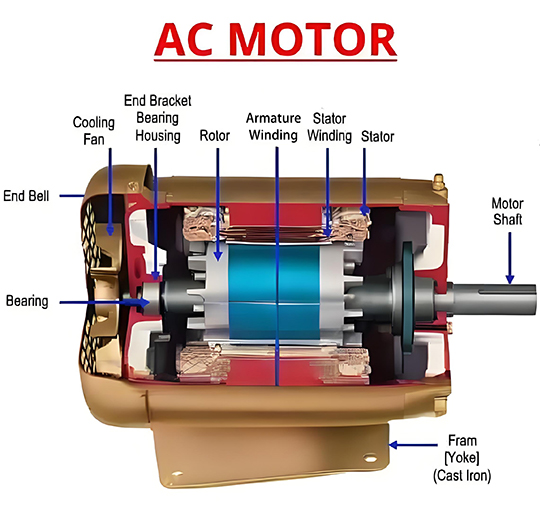
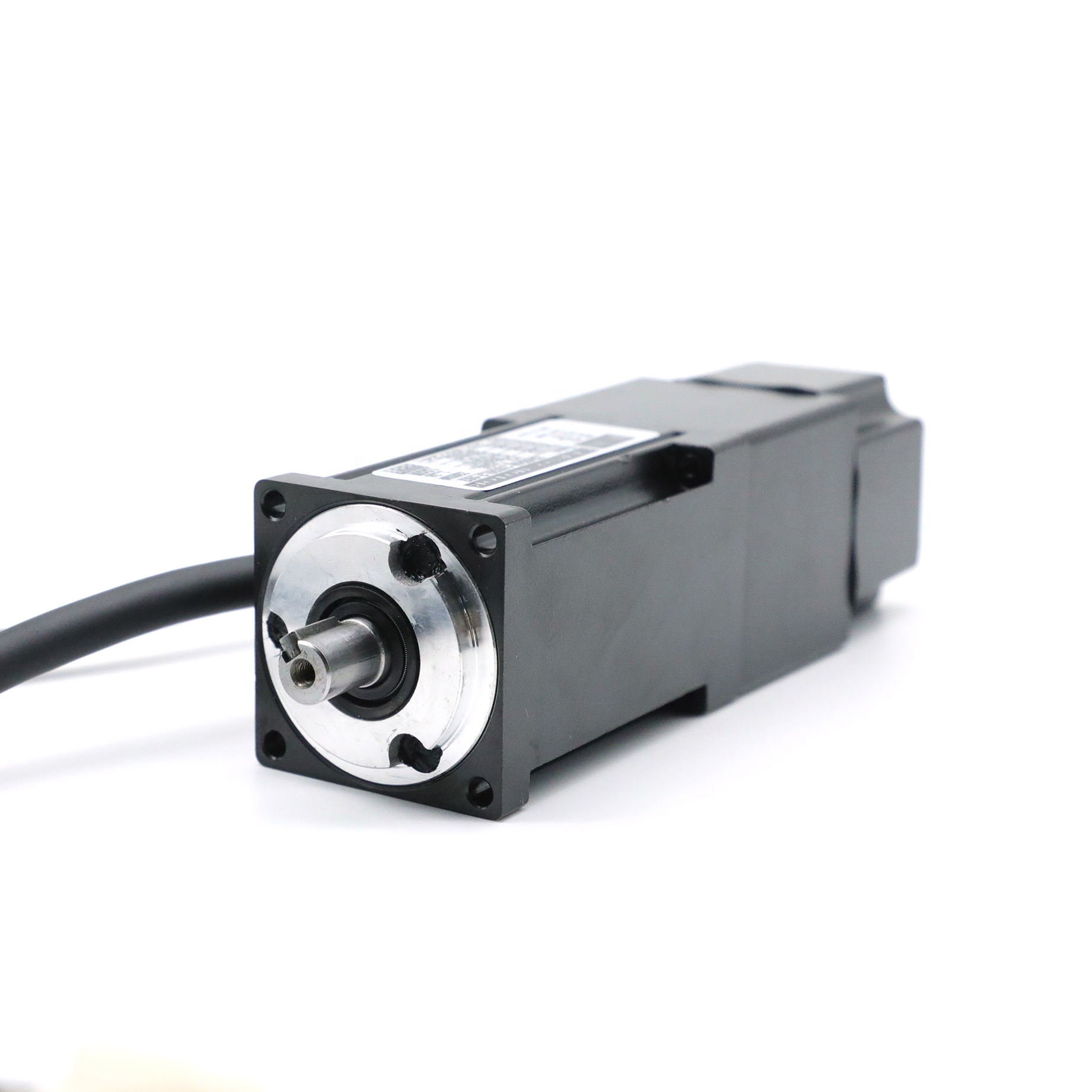
Structure of a Servo Motor
A typical servo motor consists of three core components:
- Motor Core: Usually a DC brushless motor (or AC motor in industrial models) with a rotor (permanent magnets) and stator (electromagnetic coils). Brushless designs are common for their efficiency and long lifespan.
- Feedback Device: An encoder (optical or magnetic) or resolver that continuously monitors the rotor’s position, speed, and direction. This data is sent back to the controller to enable closed-loop correction.
- Controller/Driver: A built-in or external circuit that processes the input signal (e.g., PWM for hobby servos, analog/digital signals for industrial models) and adjusts the motor’s output based on feedback. The controller ensures the motor reaches and maintains the target position with minimal error.
Servo motors are often compact, with integrated electronics for simplified installation. Their design prioritizes dynamic response, making them suitable for high-speed, high-accuracy tasks.
Structure of a Stepper Motor
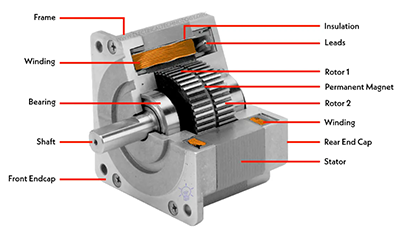
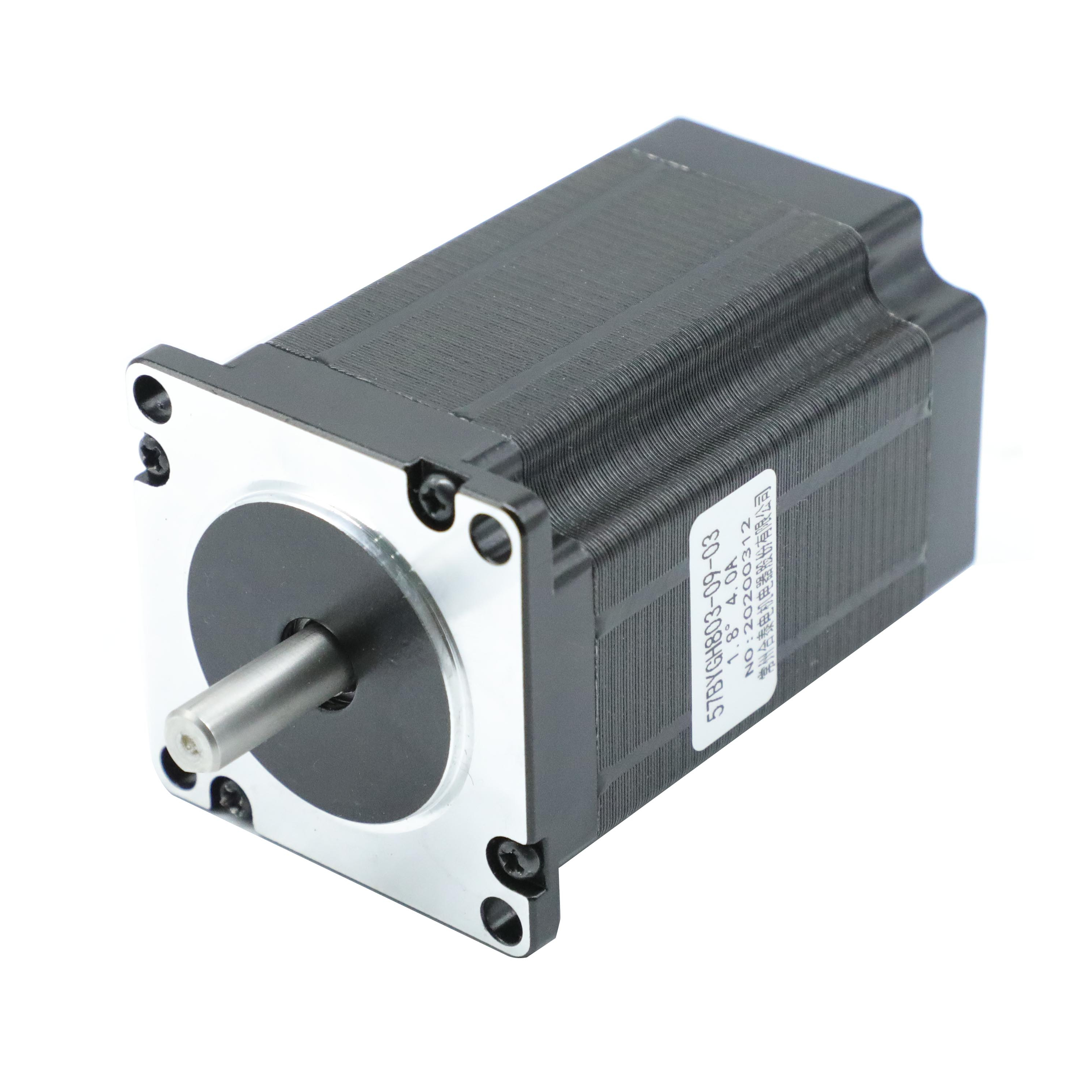
Stepper motors have a simpler design, lacking feedback components. Key parts include:
- Stator: A stationary component with multiple teeth wound with copper coils. These coils are grouped into "phases" (typically 2, 4, or 5 phases), which are energized in sequence to drive rotation.
- Rotor: The rotating part, which can be either permanent magnet (PM) or variable reluctance (VR). PM rotors use permanent magnets, while VR rotors are made of ferromagnetic material. Hybrid steppers, a popular subtype, combine both designs for improved torque and precision.
- Driver Circuit: An external device that sends electrical pulses to the stator coils, dictating the step sequence. The driver converts low-power control signals (from a microcontroller) into high-current pulses needed to energize the coils.
The absence of feedback mechanisms simplifies the stepper motor’s structure, reducing cost but limiting its ability to correct for missed steps or external disturbances.
Working Principles: How They Operate
The operational logic of servo and stepper motors further underscores their differences.
How a Servo Motor Works
Servo motors operate on a closed-loop control system:
- Input Signal: The user sends a target position, speed, or torque signal (e.g., PWM for hobby servos, 0–10V for industrial models) to the controller.
- Feedback Comparison: The encoder measures the rotor’s current position and sends this data to the controller.
- Error Correction: The controller calculates the difference (error) between the target and actual position. If there’s a discrepancy, it adjusts the motor’s voltage/current to rotate the rotor until the error is eliminated.
- Dynamic Adjustment: This process repeats continuously, allowing the motor to respond quickly to changes in the input signal or external loads (e.g., a robotic arm encountering resistance).
How a Stepper Motor Works
Stepper motors use an open-loop system based on pulse sequencing:
- Pulse Input: A controller (e.g., Arduino) sends electrical pulses to the driver, with each pulse corresponding to a step.
- Coil Energization: The driver energizes the stator coils in a specific order (e.g., A→AB→B→BC→C→CA for a 3-phase motor), creating magnetic fields that pull the rotor’s teeth into alignment with the stator’s teeth.
- Incremental Motion: Each pulse advances the rotor by a fixed angle (step). For example, a 1.8-degree stepper motor requires 200 pulses to complete a full 360-degree rotation.
- No Feedback: The system assumes the rotor follows each pulse perfectly. If the load exceeds the motor’s torque, it may skip steps without detection, leading to position errors.
Performance Comparison: Key Metrics
When choosing between a servo motor and a stepper motor, performance metrics like precision, torque, speed, and efficiency are critical.
Precision and Accuracy
- Servo Motor: Closed-loop feedback ensures high accuracy (typically ±0.1 degrees or better), even under varying loads. They can correct for errors in real time, making them ideal for applications requiring exact positioning (e.g., robotic surgery tools).
- Stepper Motor: Open-loop design limits accuracy to the step angle (e.g., ±0.5% of step angle for high-quality models). While precise at low speeds, they may lose steps under heavy loads, reducing reliability in dynamic scenarios.
Torque Characteristics
- Servo Motor: Torque remains relatively consistent across a wide speed range, with peak torque available for short bursts (e.g., accelerating a load). This makes them suitable for applications needing both speed and power (e.g., CNC machine spindles).
- Stepper Motor: Torque is highest at low speeds and decreases as speed increases (due to inductive effects in the coils). They excel at holding position without power (detent torque) but struggle with high-speed, high-torque tasks.
Speed and Responsiveness
- Servo Motor: Designed for high-speed operation (up to 10,000 RPM for industrial models) with rapid acceleration/deceleration. Their closed-loop control allows smooth, precise motion even at high speeds (e.g., drone propellers).
- Stepper Motor: Limited to lower speeds (typically <2,000 RPM) to avoid resonance and step loss. They are better suited for slow, controlled movements (e.g., 3D printer extruders).
Efficiency and Power Consumption
- Servo Motor: More efficient at high speeds, as the controller adjusts power output based on load. They consume less energy when maintaining a position, as only enough current is used to counteract external forces.
- Stepper Motor: Less efficient, especially at rest, as they continuously energize coils to hold position. This can lead to heat buildup in prolonged stationary applications.
Applications: Choosing the Right Motor
The unique strengths of servo and stepper motors make them suited for distinct use cases.
Ideal Applications for Servo Motors
- Robotics: Robotic arms, humanoid robots, and drones require precise, dynamic motion with rapid response to changing environments.
- Aerospace and Defense: Flight control systems, missile guidance, and satellite positioning demand high reliability and accuracy.
- Industrial Automation: Conveyor belts, pick-and-place machines, and CNC routers benefit from servo motors’ speed and torque consistency.
- Medical Devices: Surgical robots, infusion pumps, and imaging equipment rely on the precision and smooth motion of servos.
Ideal Applications for Stepper Motors
- 3D Printing and CNC: Layer-by-layer printing and precise cutting tasks thrive on steppers’ incremental motion and low-speed torque.
- Textile Machinery: Fabric cutting and weaving machines use steppers for controlled, repeatable movements.
- Office Equipment: Printers, scanners, and plotters leverage steppers for paper feeding and carriage positioning.
- HVAC and Valves: Damper controls and valve actuators use steppers to maintain fixed positions with minimal energy.
FAQ
What is the main difference between a servo motor and a stepper motor?
The key difference is control: servo motors use closed-loop feedback (encoders) to correct position errors, while stepper motors use open-loop pulse control without feedback. This makes servos more accurate for dynamic tasks, while steppers are simpler and cheaper for static or low-speed applications.
When should I choose a servo motor over a stepper motor?
Choose a servo motor for applications requiring high speed, dynamic torque, or real-time error correction (e.g., robotics, high-speed automation). They excel in scenarios where load variations or precision are critical.
When is a stepper motor the better choice?
Stepper motors are ideal for low-speed, high-precision tasks with consistent loads (e.g., 3D printing, CNC). They are cost-effective, easy to control, and reliable for applications where step loss is unlikely.
Can a stepper motor achieve the same accuracy as a servo motor?
In theory, high-resolution steppers (e.g., 0.9-degree step angle with microstepping) can match servo precision at low speeds. However, servos maintain accuracy under varying loads, while steppers may lose steps without detection.
Are servo motors more expensive than stepper motors?
Yes, servo motors are typically more expensive due to their integrated feedback systems and complex controllers. Steppers have lower upfront costs but may require additional components (e.g., drivers) for optimal performance.
Can servo motors and stepper motors be used interchangeably?
Rarely. Their distinct control systems and performance characteristics make them suited for specific tasks. For example, replacing a servo with a stepper in a robotic arm could lead to position errors under load, while using a servo in a 3D printer may be unnecessarily costly.
Which is better, an AC or DC motor
Servo Motors vs DC Motors: What's the Difference
Related Article

Brushless DC (BLDC) motors are widely used in EVs, drones, industrial machinery, and robotics for their efficiency and long lifespan. Unlike brushed motors—where reversing direction only requires swapping power leads—BLDC motors rely on electronic commutation, making direction reversal more nuanced.
How to Reverse Direction in Brushless Motors

Brushed and brushless DC motors are two of the most common electric motor designs, powering everything from toys to electric vehicles. While both convert electrical energy to mechanical motion, their internal structures, performance, and use cases differ drastically.
What’s the Difference Between a Brushed and Brushless Motor

Brushed DC motors are reliable, but wear and tear over time can lead to failure. Whether you’re troubleshooting a power tool, household appliance, or industrial conveyor motor, knowing the signs of a bad brushed motor saves time and prevents further damage.
How to Know If a Brushed Motor Is Bad
