


What Is a Solenoid Valve
2025-07-25
What Is a Solenoid Valve?
In the realm of fluid control systems, solenoid valves stand as unsung heroes, enabling precise, automated regulation of liquids, gases, and steam in countless industrial, commercial, and residential applications. From controlling water flow in a washing machine to managing critical processes in chemical plants, these devices play a pivotal role in modern engineering. But what exactly is a solenoid valve? This blog will dissect its definition, working principles, types, applications, and technical specifications to provide a thorough understanding.
Defining Solenoid Valves: The Basics
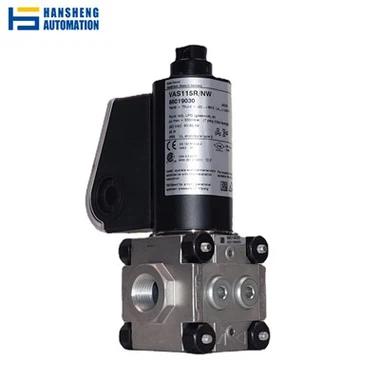
A solenoid valve is an electromechanically operated device designed to control the flow of fluids (liquids, gases, or slurries) by opening, closing, or partially obstructing a passageway. At its core, it combines two key components: a solenoid—an electromagnetic coil that converts electrical energy into mechanical force—and a valve mechanism that regulates fluid flow based on the solenoid’s action.
Unlike manual valves requiring human intervention or pneumatic/hydraulic valves dependent on pressure differentials, solenoid valves offer rapid, automated control triggered by electrical signals. This makes them ideal for integration into electronic control systems, allowing for remote operation, timing-based activation, and responsiveness to sensor inputs. Solenoid valves are available in sizes ranging from miniature 1/32-inch ports (used in medical devices) to large 12-inch flanged valves (employed in industrial pipelines), catering to diverse flow requirements.
How Solenoid Valves Work: The Operational Mechanism
Core Components and Their Roles
Every solenoid valve consists of several essential parts working in tandem:
- Solenoid Coil: A copper wire winding that generates a magnetic field when energized. The coil’s design—including wire gauge, number of turns, and core material (typically ferromagnetic)—determines its electrical characteristics (voltage, current) and magnetic strength.
- Plunger/Armature: A movable ferromagnetic component within the coil. When the coil is energized, the magnetic field attracts the plunger, initiating mechanical movement.
- Valve Body: A housing that contains the fluid passageway and seals. Materials vary by application: brass for general use, stainless steel for corrosive media, and plastic (PVC, PTFE) for chemical compatibility.
- Seal/Plug: Attached to the plunger, this component blocks or unblocks the valve’s orifice to control flow. Seals are made from elastomers (rubber, EPDM, Viton) or metal, depending on temperature, pressure, and chemical resistance needs.
- Spring: Returns the plunger to its default position when the coil is de-energized, closing or opening the valve based on its design (normally open or normally closed).
The Operational Cycle
- De-energized State: In a normally closed (NC) valve, the spring forces the seal against the orifice, blocking flow. In a normally open (NO) valve, the spring holds the seal away from the orifice, allowing fluid to pass.
- Energization: When an electrical current (AC or DC) flows through the coil, a magnetic field forms, overcoming spring force to pull the plunger. For NC valves, this lifts the seal from the orifice, permitting flow; for NO valves, it pushes the seal into the orifice, stopping flow.
- De-energization: When current is cutting,the magnetic field collapses. The spring returns the plunger to its original position, reverting the valve to its default state.
Response times for this cycle are typically 5 to 100 milliseconds, with high-speed models achieving sub-10-millisecond actuation—critical for applications like fuel injection systems or rapid process control.
Types of Solenoid Valves: Classifications by Design and Function
By Operational Principle
Direct-Acting Solenoid Valves
Direct-acting valves rely solely on the solenoid’s force to open/close the orifice, with the plunger directly engaging the seal. They operate independently of fluid pressure, making them suitable for low-pressure applications (0 to 150 psi) and small flow rates. Their compact design (often 1/8-inch to 1/2-inch ports) and ability to handle vacuum conditions make them ideal for medical devices (e.g., IV fluid control) and analytical instruments.
Pilot-Operated Solenoid Valves
Pilot-operated valves use fluid pressure to assist in opening/closing, reducing the solenoid’s required force. A small “pilot” orifice controls pressure in a chamber above a diaphragm or piston; when the solenoid opens the pilot orifice, pressure differential across the diaphragm drives the main valve open. These valves handle higher pressures (up to 1,000 psi) and larger flows (1-inch to 4-inch ports) than direct-acting models but require a minimum inlet pressure (typically 5 to 10 psi) to operate. They are common in industrial water systems, irrigation, and HVAC applications.
Semi-Direct-Acting Solenoid Valves
A hybrid design combining direct-acting and pilot-operated features, these valves can open with minimal pressure (as low as 0 psi) using direct solenoid force but leverage fluid pressure for full flow. They balance versatility with efficiency, used in applications like fuel systems and compressed air lines where pressure varies.
By Function and Flow Control
On/Off Solenoid Valves
The most common type, these valves operate in binary states: fully open or fully closed. They are used in applications requiring simple flow activation, such as vending machines (controlling beverage dispensing) or car washes (activating spray nozzles). Response times range from 10ms to 100ms, ensuring rapid switching.
Proportional Solenoid Valves
These valves modulate flow rate proportionally to the electrical input (e.g., current or voltage). By varying the coil’s current, the plunger’s position adjusts, partially opening the orifice to regulate flow. They offer precise control (±2% accuracy) and are used in hydraulic systems, fuel injection, and HVAC dampers. For example, in automotive engines, proportional solenoids adjust fuel flow based on engine load, optimizing efficiency.
Multi-Port Solenoid Valves
Valves with three or more ports (e.g., 3-way, 4-way) redirect flow between pathways. A 3-way valve might switch flow from an inlet to one of two outlets, used in directional control for pneumatic cylinders or mixing applications. 4-way valves are common in hydraulic systems to control actuator movement (extend/retract).
Materials and Construction: Matching the Application
The choice of materials is critical to a solenoid valve’s performance and longevity, as they must withstand the operating environment and fluid properties:
- Valve Body: Brass (cost-effective, good for water/air), stainless steel (304 for mild corrosion, 316 for seawater/chemicals), PVC (low-cost, for non-potable water), and PTFE (high chemical resistance, for acids).
- Seals: EPDM (excellent for water, steam up to 150°C), Viton (resistant to oils, fuels, and high temperatures up to 200°C), silicone (food-grade, used in dairy processing), and metal (brass, stainless steel) for high-temperature applications (up to 400°C) where elastomers would degrade.
- Coil Insulation: Class B (130°C), Class F (155°C), or Class H (180°C) insulation ensures safe operation at elevated temperatures, critical for industrial ovens or steam systems.
Applications Across Industries
Industrial Automation
Solenoid valves are workhorses in manufacturing, controlling pneumatic cylinders, lubrication systems, and coolant flow. In assembly lines, 1/4-inch brass solenoid valves with 12V DC coils rapidly actuate robotic grippers, with cycle rates exceeding 100 operations per minute. For high-pressure hydraulic systems, stainless steel pilot-operated valves handle pressures up to 3,000 psi, regulating oil flow to machine tools.
Water and Wastewater Management
Municipal water treatment plants use large (2-inch to 6-inch) solenoid valves to control chemical dosing (chlorine, fluoride) and backwashing of filters. Normally closed PVC valves with EPDM seals are preferred for their corrosion resistance and compatibility with treated water, ensuring reliable operation in 24/7 systems.
Automotive and Transportation
In vehicles, solenoid valves manage fuel injection (precision 12V DC valves with sub-10ms response times), transmission fluid flow, and brake systems. Electric vehicles use solenoid valves in thermal management loops to regulate coolant flow between batteries and radiators, with operating temperatures ranging from -40°C to 125°C.
Medical and Pharmaceutical
Miniature solenoid valves (1/32-inch ports) control fluid flow in dialysis machines, nebulizers, and diagnostic equipment. These valves are made from USP Class VI materials (PTFE, silicone) to ensure biocompatibility, with leak rates below 1x10⁻⁶ cc/minute of helium to prevent contamination.
Food and Beverage
Sanitary solenoid valves with stainless steel bodies and tri-clamp fittings are used in dairy, brewing, and bottling lines. They feature smooth internal surfaces (Ra < 0.8μm) to prevent bacterial growth and are designed for CIP (Clean-in-Place) and SIP (Sterilization-in-Place) processes, withstanding temperatures up to 135°C during steam sterilization.
HVAC and Refrigeration
Solenoid valves control refrigerant flow (e.g., R-410A) in air conditioning systems and hot water circulation in boilers. Normally closed valves with brass bodies and Viton seals handle refrigerant pressures up to 500 psi, while 24V AC coils integrate seamlessly with thermostat controls for energy-efficient operation.
Key Technical Specifications to Consider
Flow Rate and Cv Rating
The Cv (flow coefficient) measures a valve’s capacity to pass fluid: a higher Cv indicates greater flow. For example, a valve with Cv = 1 allows 1 gallon per minute (gpm) of water to flow with a 1 psi pressure drop. Applications requiring high flow (e.g., irrigation) use valves with Cv values of 10 or higher, while precision instruments may need Cv < 0.1.
Pressure Ratings
- Maximum Operating Pressure: Ranges from 0 psi (vacuum) for direct-acting valves to 10,000 psi for specialized industrial models.
- Minimum Pressure (Pilot-Operated): Typically 5 to 10 psi to ensure proper actuation; direct-acting valves have no minimum pressure requirement.
Voltage and Electrical Requirements
Common coil voltages include 12V DC, 24V DC, 120V AC, and 240V AC. DC coils require rectification but offer quieter operation, while AC coils are more powerful but may hum. Power consumption ranges from 1W (miniature valves) to 50W (large industrial models), with low-power “energy-saving” coils (2W) available for battery-operated devices.
Temperature Range
- Media Temperature: Elastomer-sealed valves handle -20°C to 150°C (EPDM) or -20°C to 200°C (Viton); metal-sealed valves operate up to 450°C, suitable for steam applications.
- Ambient Temperature: Coils are rated for -40°C to 85°C (industrial) or -55°C to 125°C (automotive), ensuring performance in extreme environments.
Cycle Life and Reliability
Industrial solenoid valves typically offer a service life of 100,000 to 10 million cycles, depending on operating conditions. High-quality valves with hardened stainless steel plungers and self-lubricating seals exceed 50 million cycles in low-pressure applications like air control.
Conclusion
A solenoid valve is a dynamic, electromechanically controlled device that bridges electrical signals and fluid flow, enabling automation, precision, and safety across industries. Whether regulating fuel in a car, controlling chemicals in a water treatment plant, or managing airflow in a medical device, solenoid valves remain a cornerstone of fluid control, combining simplicity with powerful functionality to drive countless technological processes.
How Does a Solenoid Valve Work
What Is a Signal Isolator
Related Article

Brushless DC (BLDC) motors are widely used in EVs, drones, industrial machinery, and robotics for their efficiency and long lifespan. Unlike brushed motors—where reversing direction only requires swapping power leads—BLDC motors rely on electronic commutation, making direction reversal more nuanced.
How to Reverse Direction in Brushless Motors

Brushed and brushless DC motors are two of the most common electric motor designs, powering everything from toys to electric vehicles. While both convert electrical energy to mechanical motion, their internal structures, performance, and use cases differ drastically.
What’s the Difference Between a Brushed and Brushless Motor

Brushed DC motors are reliable, but wear and tear over time can lead to failure. Whether you’re troubleshooting a power tool, household appliance, or industrial conveyor motor, knowing the signs of a bad brushed motor saves time and prevents further damage.
How to Know If a Brushed Motor Is Bad
