


What Is a Stepper Motor
2025-06-25
What Is a Stepper Motor? Principles, Types, and Applications
Stepper motors are a cornerstone of precision motion control, uniquely designed to translate electrical pulses into discrete mechanical movements. Unlike conventional motors that rotate continuously, these brushless DC motors move in precise angular increments called steps, making them ideal for applications requiring accurate positioning without feedback systems. This guide will clarify their fundamental nature, explore key components, classify different types, and highlight their role in modern technology—while ensuring alignment with your existing "how it works" content by focusing on foundational concepts rather than detailed operational mechanics.
1. Core Definition and Fundamental Purpose
1.1 What Defines a Stepper Motor?
A stepper motor is an electromechanical device that divides a full 360° rotation into a fixed number of discrete steps (e.g., 200 steps for 1.8° per step). Each electrical pulse sent to the motor triggers a controlled angular movement, enabling:
- Precision Positioning: Movement in specific increments (common step angles: 0.9°, 1.8°, 2.5°)
- Open-Loop Control: Reliable positioning without encoders in basic setups
- Holding Torque: The ability to maintain position when powered, even under static loads
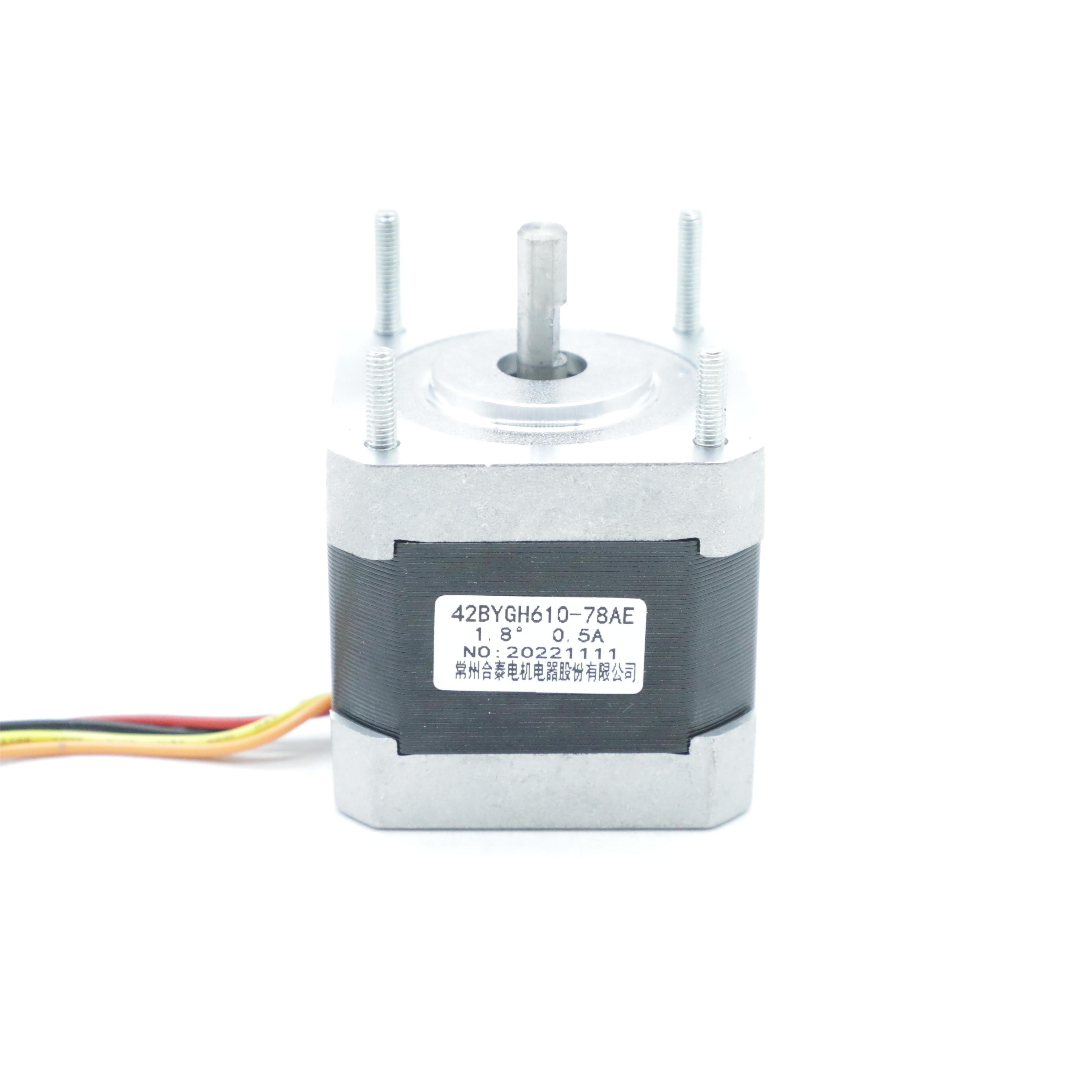
1.2 Key Structural Components
Every stepper motor consists of:
- Stator: The stationary outer housing with electromagnetic windings (phases, e.g., 2-phase, 3-phase) that generate magnetic fields.
- Rotor: The inner rotating element, which can be:
-
- A permanent magnet (PM) for basic torque
-
- Soft magnetic material (reaction type) for fine steps
-
- A hybrid design combining magnets and teeth for optimal performance
- Controller/Driver: Converts low-power signals from microcontrollers into the current required to energize stator windings.
2. Basic Operational Concept (High-Level Overview)
While your existing article details the mechanics of step generation, here's a simplified conceptual overview:
Stepper motors operate on the principle of electromagnetic attraction:
- Energizing a stator phase creates a magnetic field.
- This field pulls the rotor's nearest magnetic poles or teeth into alignment.
- Sequentially switching phase energization causes the rotor to "step" to the next position, creating controlled rotation.
This step-by-step motion is why they excel in applications needing repeatable, incremental movement—no continuous feedback required for basic positioning.
3. Major Types of Stepper Motors
3.1 Permanent Magnet (PM) Steppers
- Design: Rotor is a radial permanent magnet; stator has few poles (typically 2-phase).
- Pros: Simple, cost-effective, strong holding torque when powered.
- Cons: Larger step angles (7.5°–15°), detent torque at rest.
- Use Cases: Printers, small CNC machines, low-precision robotics.
3.2 Reaction (Variable Reluctance, VR) Steppers
- Design: Rotor of soft magnetic teeth; stator windings create temporary fields.
- Pros: Smaller step angles (1.2°–2.5°), fast acceleration.
- Cons: No holding torque when off, high heat generation.
- Note: Less common today, superseded by hybrid designs in most applications.
3.3 Hybrid Steppers (Most Popular)
- Design: Combines PM and VR features: axial permanent magnet + soft magnetic teeth.
- Pros:
-
- High resolution (1.8°/step standard, down to 0.09° with micro-stepping)
-
- Strong low-speed torque, low vibration
- Cons: Requires bipolar drivers, higher cost.
- Applications: 3D printers, robotics, medical devices, CNC machines.
4. Why Stepper Motors Stand Out
4.1 Unique Advantages
- Open-Loop Precision: Achieve accurate positioning without complex feedback systems, reducing cost and complexity.
- Torque Consistency: Maintain high torque at low speeds (unlike AC motors, which lose torque as RPM drops).
- Digital Compatibility: Controlled via simple pulse trains, making them microcontroller-friendly (Arduino, Raspberry Pi).
4.2 Limitations to Consider
- Speed-Torque Tradeoff: Torque decreases at high speeds due to inductive effects.
- Resonance Risks: Vibration may occur at specific speeds (mitigated by micro-stepping).
- Heat Management: Requires proper driver sizing to avoid winding overheating in high-power use.
5. Real-World Applications
5.1 Industrial & Manufacturing
- CNC machines (X/Y/Z axis control)
- Conveyor systems for precise material positioning
- Robotic arms for pick-and-place operations
5.2 Consumer & Creative Tech
- 3D printers (axis movement and extruder control)
- Camera lenses (autofocus/zoom mechanisms, quiet hybrid steppers)
- Printers/scanners (paper feed and head movement)
5.3 Medical & Scientific
- Syringe pumps (microliter-level fluid control)
- MRI tables (non-magnetic variants for safe operation in confined spaces)
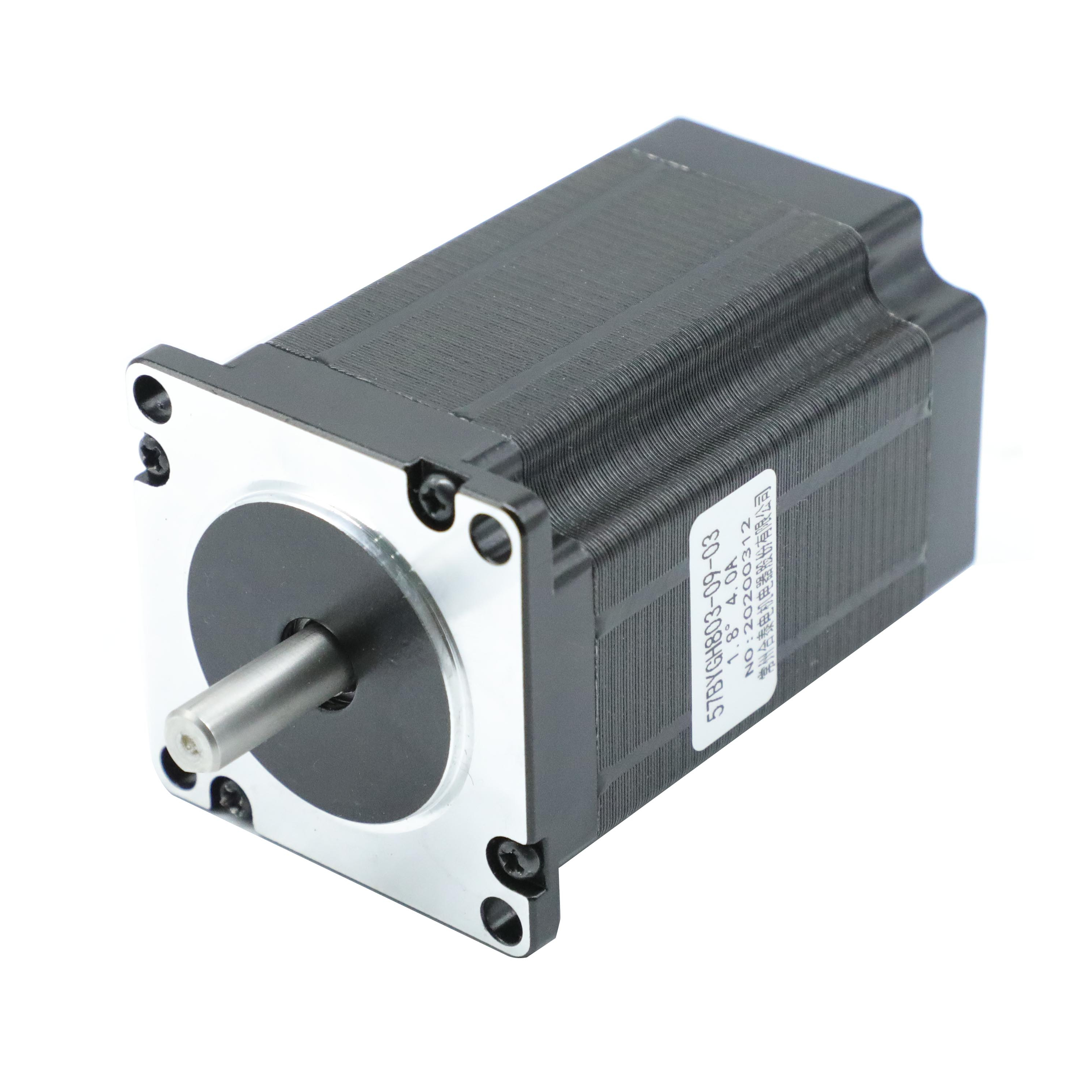
6. Key Specifications for Selection
When choosing a stepper motor, prioritize:
- Step Angle: Smaller angles (e.g., 1.8°) mean higher resolution.
- Holding Torque (N·m): Must exceed your application's static load requirements.
- Phase Current (A): Ensure your driver can supply the motor's rated current per phase.
- Form Factor: NEMA sizes (17, 23, etc.) balance torque with physical dimensions.
7. How They Differ from Other Motors
|
Feature
|
Stepper Motor
|
Servo Motor
|
Traditional DC Motor
|
|
Position Control
|
Open-loop (steps)
|
Closed-loop (feedback)
|
Continuous (no precision)
|
|
Torque at Low Speed
|
High
|
Variable (depends on load)
|
Low
|
|
Complexity
|
Moderate (driver needed)
|
High (encoder + controller)
|
Low (simple voltage control)
|
|
Typical Use Case
|
Precision positioning
|
Dynamic motion control
|
Speed/variable load tasks
|
8. Emerging Trends
- Miniaturization: NEMA 8/11 motors for portable devices and medical robotics.
- Smart Integration: Drivers with built-in microcontrollers for auto-tuning and fault detection.
- Energy Efficiency: Improved winding materials to reduce heat and power consumption.
Conclusion
Stepper motors are a versatile solution for applications demanding precise, repeatable motion without the complexity of feedback systems. By understanding their core definition, key types, and practical advantages, you can leverage their unique capabilities in projects ranging from DIY 3D printers to industrial automation. For a deeper dive into their operational mechanics, refer to our companion article on "How Stepper Motors Work"—together, these resources provide a comprehensive toolkit for integrating these powerful motors into your designs.
How Does a Stepper Motor Work
How to Control the Speed of a DC Motor
Related Article

Brushless DC (BLDC) motors are widely used in EVs, drones, industrial machinery, and robotics for their efficiency and long lifespan. Unlike brushed motors—where reversing direction only requires swapping power leads—BLDC motors rely on electronic commutation, making direction reversal more nuanced.
How to Reverse Direction in Brushless Motors

Brushed and brushless DC motors are two of the most common electric motor designs, powering everything from toys to electric vehicles. While both convert electrical energy to mechanical motion, their internal structures, performance, and use cases differ drastically.
What’s the Difference Between a Brushed and Brushless Motor

Brushed DC motors are reliable, but wear and tear over time can lead to failure. Whether you’re troubleshooting a power tool, household appliance, or industrial conveyor motor, knowing the signs of a bad brushed motor saves time and prevents further damage.
How to Know If a Brushed Motor Is Bad
