


What is Brushless DC Motor
2025-06-16
What is Brushless DC Motor?
In the ever-evolving landscape of electrical engineering and automation, the brushless DC motor has emerged as a revolutionary technology, powering a wide range of applications from consumer electronics to industrial machinery. But what exactly is a brushless DC motor, and why has it become so popular? This blog post aims to demystify this advanced motor technology, exploring its definition, structure, working principles, advantages, applications, and future prospects.
Defining the Brushless DC Motor
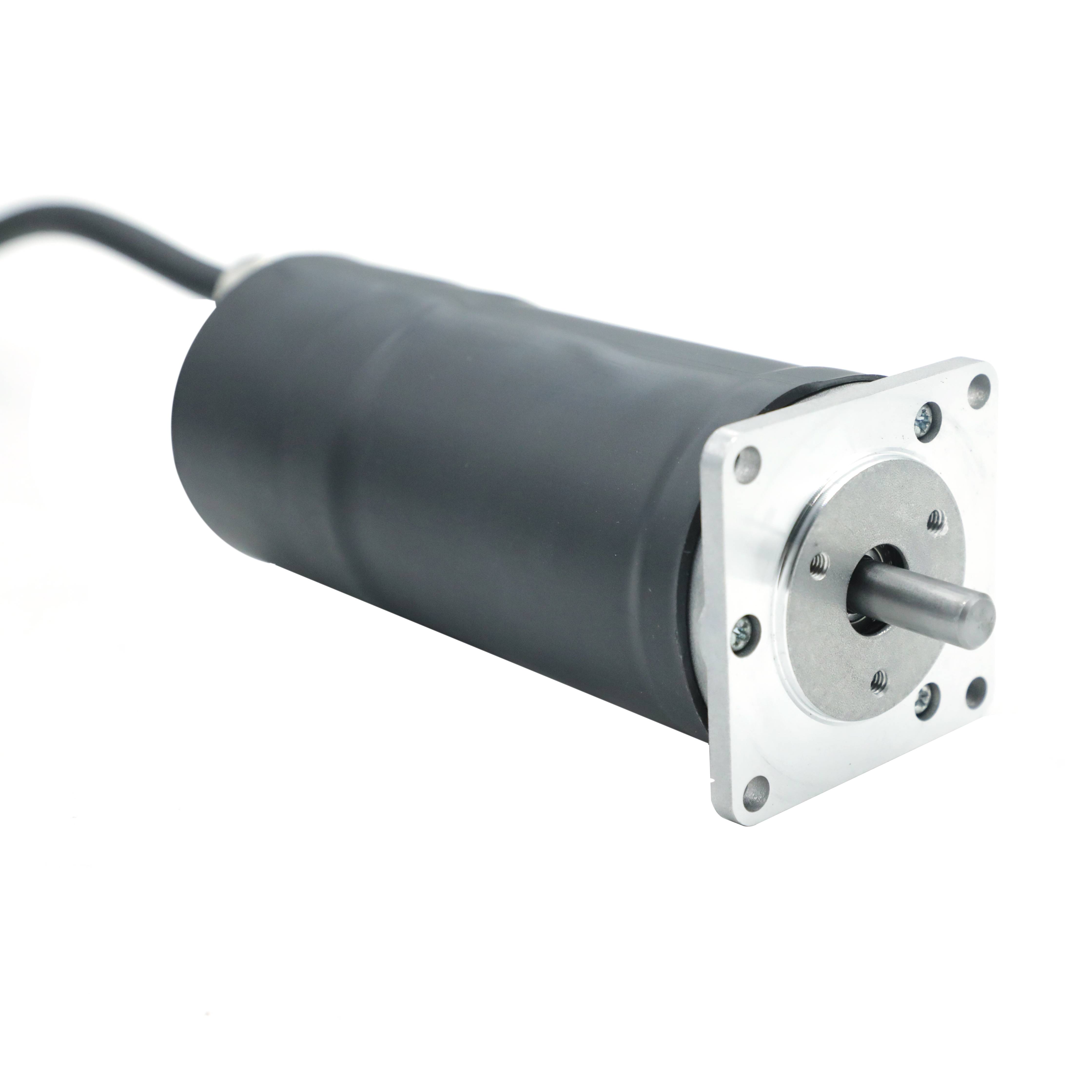
At its core, a brushless DC (BLDC) motor is an electronically commutated electric motor that operates on direct current (DC) power but uses an electronic control system instead of traditional mechanical brushes and a commutator. Unlike brushed DC motors, where the mechanical brushes make physical contact with the commutator to reverse the current direction in the armature windings, BLDC motors rely on sensors (or sensorless control algorithms) and solid-state electronic circuits, such as inverters, to achieve the same effect.
The elimination of brushes in BLDC motors brings about significant improvements in performance, reliability, and efficiency. Brushes in traditional motors are prone to wear and tear over time, leading to maintenance issues, reduced lifespan, and electrical arcing, which can generate electromagnetic interference (EMI). In contrast, brushless DC motors offer a cleaner, more efficient, and maintenance-free operation, making them ideal for a multitude of modern applications.
Structure of a Brushless DC Motor
Stator
The stator is the stationary part of the BLDC motor and plays a crucial role in generating the magnetic field. It typically consists of multiple coils (windings) arranged in a specific pattern. These windings are connected to an external power source through an electronic controller. When an electric current flows through the stator windings, it creates a rotating magnetic field. The design of the stator windings, including the number of phases (usually three-phase for most BLDC motors) and the winding configuration, affects the motor's performance characteristics, such as torque, speed, and efficiency.
Rotor
The rotor is the rotating part of the motor and is equipped with permanent magnets. These magnets are usually made from high-performance magnetic materials like neodymium-iron-boron (NdFeB), which provide a strong and stable magnetic field. The arrangement of the magnets on the rotor can vary, with common configurations including surface-mounted magnets (SMPM) and interior permanent magnet (IPM) designs. The interaction between the magnetic field of the rotor's permanent magnets and the rotating magnetic field generated by the stator is what drives the rotation of the motor.
Electronic Controller
The electronic controller is a key component of a BLDC motor system. It receives input signals, such as speed commands or position feedback, and uses this information to control the flow of current to the stator windings. The controller typically includes a microcontroller or a digital signal processor (DSP) that implements the commutation algorithm. This algorithm determines when and how to switch the current in the stator windings to maintain the rotation of the motor. Additionally, the controller may also incorporate features for speed regulation, torque control, and protection against overcurrent, overvoltage, and overheating.
Sensors (Optional)
Some BLDC motors use sensors, such as hall effect sensors or encoder sensors, to provide information about the rotor's position and speed. Hall effect sensors are commonly used for commutation purposes, detecting the position of the rotor's magnets and sending signals to the controller to initiate the appropriate current switching in the stator windings. Encoder sensors, on the other hand, offer more precise information about the rotor's position and can be used for applications that require high accuracy, such as servo systems. However, sensorless BLDC motor control techniques have also been developed, which rely on estimating the rotor's position based on the back electromotive force (EMF) generated in the stator windings, eliminating the need for additional sensors and reducing costs and complexity.
Working Principles of a Brushless DC Motor
The operation of a BLDC motor is based on the principle of electromagnetic interaction between the magnetic fields of the stator and the rotor. When the electronic controller supplies current to the stator windings, a rotating magnetic field is generated. The permanent magnets on the rotor are attracted and repelled by this rotating magnetic field, causing the rotor to rotate.
The commutation process in a BLDC motor is what differentiates it from other types of motors. In a three-phase BLDC motor, for example, the controller sequentially switches the current in the three stator windings in a specific sequence. This sequence is carefully controlled to maintain the rotation of the rotor. As the rotor rotates, the position of the magnets relative to the stator windings changes. The sensors (if present) or the sensorless control algorithm detects this change and signals the controller to adjust the current in the stator windings accordingly. This continuous process of detecting the rotor's position and switching the current in the stator windings ensures smooth and efficient rotation of the motor.
The speed of a BLDC motor can be controlled by adjusting the frequency of the current supplied to the stator windings. By increasing or decreasing the frequency, the speed of the rotating magnetic field can be adjusted, which in turn controls the speed of the rotor. Additionally, the torque of the motor can be regulated by controlling the magnitude of the current flowing through the stator windings. Higher current levels generally result in higher torque output, allowing the motor to handle heavier loads.
Advantages of Brushless DC Motors
High Efficiency
One of the most significant advantages of BLDC motors is their high efficiency. The absence of brushes reduces electrical losses due to friction and arcing, resulting in less energy wasted as heat. This high efficiency translates into lower power consumption, making BLDC motors more energy-efficient compared to brushed DC motors. In applications where energy conservation is a priority, such as electric vehicles and renewable energy systems, the use of BLDC motors can lead to significant cost savings and environmental benefits.
Long Lifespan
Since BLDC motors do not have brushes that wear out over time, they have a much longer lifespan compared to brushed motors. The elimination of mechanical wear and tear reduces the need for frequent maintenance and replacement of components. This makes BLDC motors a reliable choice for applications that require continuous operation over extended periods, such as industrial automation systems and medical equipment.
High Power Density
BLDC motors offer a high power density, meaning they can deliver a large amount of power in a relatively small and lightweight package. This is due to the efficient design of the stator and rotor, as well as the use of high-performance permanent magnets. The high power density of BLDC motors makes them suitable for applications where space and weight are critical factors, such as drones, robotics, and portable electronic devices.
Precise Speed and Torque Control
The electronic control system of BLDC motors allows for precise control of speed and torque. By adjusting the frequency and magnitude of the current supplied to the stator windings, the motor can be operated at a wide range of speeds and torques with high accuracy. This makes BLDC motors ideal for applications that require precise motion control, such as CNC machines, 3D printers, and servo systems.
Low Noise and Vibration
The smooth operation of BLDC motors, thanks to the elimination of brushes and the precise commutation process, results in low noise and vibration levels. This is particularly important in applications where quiet operation is required, such as in office equipment, home appliances, and audio-visual devices.
Applications of Brushless DC Motors
Consumer Electronics
BLDC motors are widely used in consumer electronics due to their small size, high efficiency, and low noise operation. They can be found in devices such as computer fans, hard disk drives, DVD players, and robotic vacuum cleaners. In computer fans, for example, BLDC motors provide efficient cooling while operating quietly, ensuring a comfortable working environment. In robotic vacuum cleaners, the precise control of BLDC motors allows for accurate navigation and cleaning performance.
Home Appliances
Many modern home appliances, including washing machines, dryers, refrigerators, and air conditioners, now use BLDC motors. In washing machines and dryers, BLDC motors offer precise control of the drum speed, resulting in better cleaning and drying performance. In refrigerators, the high efficiency of BLDC motors helps to reduce energy consumption and lower electricity bills. Air conditioners with BLDC motors operate more quietly and efficiently, providing a more comfortable living environment.
Industrial Automation
In the industrial sector, BLDC motors play a crucial role in automation systems. They are used in conveyor belts, robotic arms, CNC machines, and packaging equipment. The high precision, reliability, and long lifespan of BLDC motors make them suitable for continuous operation in harsh industrial environments. In robotic arms, for example, the precise control of BLDC motors enables accurate movement and positioning, improving the efficiency and productivity of manufacturing processes.
Electric Vehicles
BLDC motors are increasingly being used in electric vehicles (EVs), including electric cars, motorcycles, and bicycles. The high efficiency, high power density, and precise control of BLDC motors make them an ideal choice for EV drivetrains. They provide the necessary torque and speed to propel the vehicle, while also maximizing the driving range by minimizing energy consumption. Additionally, the low maintenance requirements of BLDC motors contribute to the overall reliability and cost-effectiveness of EVs.
Aerospace and Defense
In the aerospace and defense industries, where reliability, performance, and weight are critical factors, BLDC motors are used in a variety of applications. They can be found in aircraft flight control systems, missile guidance systems, and unmanned aerial vehicles (UAVs). The high power density and long lifespan of BLDC motors make them suitable for these demanding applications, ensuring reliable operation in extreme conditions.
Future Trends of Brushless DC Motors
As technology continues to advance, the future of BLDC motors looks promising. Here are some of the key trends that we can expect to see in the coming years:
Increased Integration with Smart Technologies
BLDC motors are likely to become more integrated with smart technologies, such as the Internet of Things (IoT) and artificial intelligence (AI). This integration will enable real-time monitoring and control of motor performance, predictive maintenance, and optimization of energy consumption. For example, in industrial applications, IoT-enabled BLDC motors can be connected to a central control system, allowing operators to remotely monitor the motor's status, detect potential faults, and adjust the operation parameters as needed.
Development of Higher Efficiency and Power Density Designs
Research and development efforts will continue to focus on improving the efficiency and power density of BLDC motors. New materials, such as advanced magnetic materials and high-conductivity copper alloys, are being explored to further enhance the performance of BLDC motors. Additionally, innovative design techniques, such as optimized winding configurations and advanced cooling systems, are being developed to increase the power density and reduce the size and weight of BLDC motors.
Expansion into New Application Areas
With their numerous advantages, BLDC motors are expected to expand into new application areas. For example, in the healthcare industry, BLDC motors could be used in advanced medical devices, such as robotic surgical systems and artificial hearts. In the renewable energy sector, BLDC motors may find applications in wind turbines and solar tracking systems, improving the efficiency and performance of these energy generation technologies.
Advancements in Sensorless Control Techniques
The development of more advanced sensorless control techniques will continue to reduce the cost and complexity of BLDC motor systems. New algorithms and control strategies are being developed to improve the accuracy and reliability of sensorless control, making it suitable for a wider range of applications. This will enable the use of BLDC motors in cost-sensitive applications where the use of sensors is not practical.
In conclusion, brushless DC motors are a highly advanced and versatile technology that has revolutionized the field of electrical engineering. Their unique design, working principles, and numerous advantages make them suitable for a wide range of applications, from consumer electronics to industrial automation and electric vehicles. As technology continues to evolve, we can expect to see further advancements in BLDC motor technology, opening up new possibilities and applications in the future. Whether you are an engineer, a designer, or simply interested in the latest technological innovations, understanding brushless DC motors is essential in today's rapidly changing world.
How to Test a DC Motor
What is a DC Electric Motor
Related Article

Brushless DC (BLDC) motors are widely used in EVs, drones, industrial machinery, and robotics for their efficiency and long lifespan. Unlike brushed motors—where reversing direction only requires swapping power leads—BLDC motors rely on electronic commutation, making direction reversal more nuanced.
How to Reverse Direction in Brushless Motors

Brushed and brushless DC motors are two of the most common electric motor designs, powering everything from toys to electric vehicles. While both convert electrical energy to mechanical motion, their internal structures, performance, and use cases differ drastically.
What’s the Difference Between a Brushed and Brushless Motor

Brushed DC motors are reliable, but wear and tear over time can lead to failure. Whether you’re troubleshooting a power tool, household appliance, or industrial conveyor motor, knowing the signs of a bad brushed motor saves time and prevents further damage.
How to Know If a Brushed Motor Is Bad
