


What is DLC Coating
2025-05-22
What is DLC Coating? Unveiling the Wonders of Diamond-Like Carbon
In the ever-evolving world of materials science and surface engineering, Diamond-Like Carbon (DLC) coating has emerged as a revolutionary technology with a wide range of applications across various industries. This blog post aims to provide a comprehensive understanding of DLC coating, exploring its definition, surface treatment processes, coating properties, and the intricacies of the coating processing techniques.
What is DLC Coating?
DLC coating is a thin, amorphous, and metastable form of coating primarily composed of carbon atoms. It gets its name from its resemblance to diamond in terms of certain properties, such as high hardness, low friction, and excellent wear resistance. However, unlike diamond, which has a highly ordered crystal structure, DLC coatings have a disordered, non-crystalline arrangement of carbon atoms.
The carbon atoms in DLC coatings can be bonded in different ways, including sp³ (similar to diamond) and sp² (similar to graphite) hybridizations. The proportion of sp³ and sp² bonds in the coating significantly influences its properties. A higher proportion of sp³ bonds typically results in a harder and more diamond-like coating, while a higher proportion of sp² bonds can lead to better lubricity and lower friction.
DLC coatings can be further classified into several types based on their composition and manufacturing processes. These include hydrogenated DLC (a-C:H), hydrogen-free DLC (ta-C), metal-doped DLC (Me-DLC), and more. Each type has its unique characteristics and is suitable for different applications depending on the required performance criteria.
DLC Surface Treatment
DLC surface treatment refers to the process of applying a DLC coating to a substrate material to enhance its surface properties. The goal of DLC surface treatment is to improve the substrate's wear resistance, reduce friction, increase hardness, enhance corrosion resistance, and improve biocompatibility in some cases. This treatment is widely used in various industries, including automotive, aerospace, medical, and electronics.
Substrate Preparation
Before applying the DLC coating, proper substrate preparation is crucial to ensure good adhesion and performance of the coating. The first step usually involves cleaning the substrate to remove any contaminants such as oils, dirt, or oxides. This can be achieved through methods like solvent cleaning, ultrasonic cleaning, or plasma cleaning. After cleaning, the substrate may undergo surface roughening processes, such as sandblasting or chemical etching, to increase the surface area and improve the mechanical interlocking between the coating and the substrate.
Coating Deposition
There are several techniques available for depositing DLC coatings, each with its own advantages and limitations. Some of the commonly used methods include:
- Physical Vapor Deposition (PVD): PVD is a widely used technique for DLC coating deposition. It includes processes like sputtering and evaporation. In sputtering, a target made of carbon or a carbon-containing material is bombarded with energetic ions, causing carbon atoms to be ejected and deposited onto the substrate. Evaporation, on the other hand, involves heating a carbon source until it vaporizes, and the vapor then condenses on the substrate to form the coating.
- Chemical Vapor Deposition (CVD): CVD is another important method for DLC coating. It involves the reaction of gaseous precursors containing carbon atoms in the presence of a substrate at elevated temperatures. The chemical reactions lead to the decomposition of the precursors and the deposition of carbon onto the substrate, forming the DLC coating. Plasma-Enhanced Chemical Vapor Deposition (PECVD) is a variant of CVD that uses a plasma to enhance the reaction rate and improve the quality of the coating.
DLC Coating
DLC coatings offer a plethora of beneficial properties that make them highly desirable in numerous applications.
High Hardness
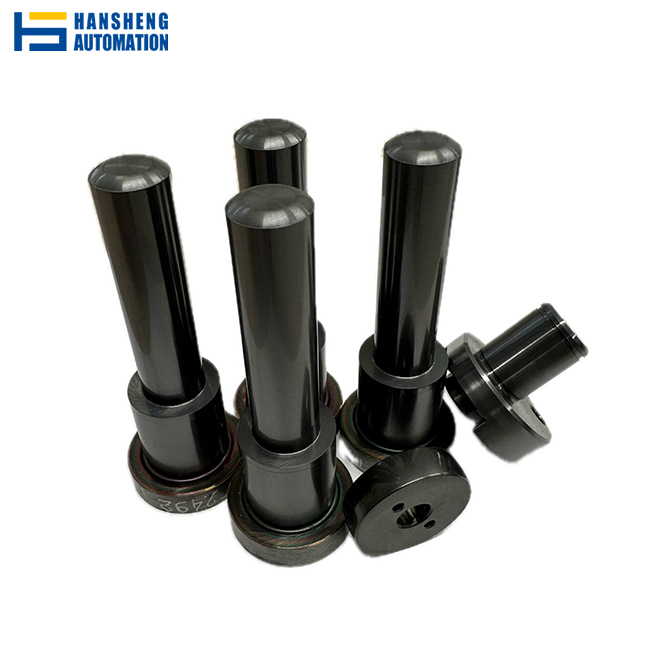
One of the most notable properties of DLC coatings is their high hardness. Depending on the type and composition of the DLC coating, the hardness can range from 10 to 80 GPa, which is significantly higher than many traditional materials. This high hardness provides excellent wear resistance, protecting the underlying substrate from abrasion, erosion, and mechanical damage. For example, in the automotive industry, DLC-coated engine components can withstand the high mechanical stresses and frictional forces during operation, reducing wear and extending the component's lifespan.
Low Friction
DLC coatings exhibit extremely low friction coefficients, typically in the range of 0.05 to 0.2. This low friction property helps to reduce energy consumption, minimize wear, and improve the efficiency of mechanical systems. In bearings and gears, DLC coatings can reduce the frictional losses, resulting in smoother operation and reduced heat generation. Additionally, the low friction of DLC coatings makes them suitable for applications where minimizing adhesion and stiction is crucial, such as in microelectromechanical systems (MEMS).
Corrosion Resistance
DLC coatings provide excellent corrosion resistance by acting as a barrier between the substrate and the corrosive environment. The inert nature of carbon and the dense structure of the DLC coating prevent the ingress of corrosive species, such as moisture, salts, and chemicals. This makes DLC coatings ideal for applications in harsh environments, such as marine, aerospace, and chemical processing industries. For instance, DLC-coated tools and components used in marine applications can resist the corrosive effects of seawater, ensuring their long-term functionality.
Biocompatibility
In the medical field, DLC coatings are highly valued for their biocompatibility. The non-toxic and inert nature of DLC makes it suitable for use in medical implants, such as orthopedic implants and dental prosthetics. The coating can reduce the risk of inflammation, tissue rejection, and bacterial adhesion, promoting better integration of the implant with the surrounding tissue and improving patient outcomes.
DLC Coating Processing
The processing of DLC coatings involves careful control of various parameters to achieve the desired coating properties and performance.
Process Parameters
- Temperature: The deposition temperature plays a crucial role in DLC coating processing. Higher temperatures can enhance the diffusion of atoms in the coating, leading to improved adhesion and crystallinity in some cases. However, excessive temperatures can also cause thermal damage to the substrate and affect the properties of the coating. Different deposition techniques have different optimal temperature ranges, and precise control of the temperature is essential.
- Pressure: The pressure during the coating deposition process influences the density and structure of the DLC coating. Lower pressures are typically used in PVD processes to ensure a high-quality coating with good adhesion. In CVD processes, the pressure affects the chemical reactions and the deposition rate. Maintaining the appropriate pressure is necessary to achieve the desired coating composition and properties.
- Gas Flow Rates: In CVD and PECVD processes, the flow rates of the gaseous precursors are critical parameters. The flow rates determine the supply of carbon and other elements to the substrate, affecting the growth rate and composition of the DLC coating. Proper adjustment of the gas flow rates is required to obtain a uniform and high-quality coating.
- Power Input: In PVD processes, especially sputtering, the power input to the target controls the rate of atom ejection and the energy of the deposited particles. Higher power can increase the deposition rate but may also lead to increased stress in the coating. In PECVD, the power input to the plasma source affects the plasma density and the reactivity of the gaseous precursors, influencing the coating properties.
Post-Treatment
After the DLC coating is deposited, post-treatment processes may be carried out to further optimize the coating properties. These can include annealing, which involves heating the coated substrate at a specific temperature for a certain period to relieve internal stresses, improve adhesion, and enhance the crystallinity of the coating. Surface finishing operations, such as polishing, may also be performed to improve the surface roughness and smoothness of the DLC coating, which can be important for applications where surface quality is critical.
In conclusion, DLC coating is a remarkable technology that offers a wide range of benefits through its unique properties and surface treatment processes. With continuous advancements in coating processing techniques and a better understanding of its properties, DLC coating is expected to play an even more significant role in various industries, driving innovation and improving the performance and durability of products. Whether it's in enhancing the efficiency of mechanical systems, protecting components from corrosion, or enabling the development of advanced medical devices, DLC coating is truly a wonder in the world of materials science and surface engineering.
How to Clean DLC Coating
How Does a Harmonic Drive Work: Unveiling the Mechanics of Strain Wave Gearing
Related Article

Brushless DC (BLDC) motors are widely used in EVs, drones, industrial machinery, and robotics for their efficiency and long lifespan. Unlike brushed motors—where reversing direction only requires swapping power leads—BLDC motors rely on electronic commutation, making direction reversal more nuanced.
How to Reverse Direction in Brushless Motors

Brushed and brushless DC motors are two of the most common electric motor designs, powering everything from toys to electric vehicles. While both convert electrical energy to mechanical motion, their internal structures, performance, and use cases differ drastically.
What’s the Difference Between a Brushed and Brushless Motor

Brushed DC motors are reliable, but wear and tear over time can lead to failure. Whether you’re troubleshooting a power tool, household appliance, or industrial conveyor motor, knowing the signs of a bad brushed motor saves time and prevents further damage.
How to Know If a Brushed Motor Is Bad
