


The application status and difficulties of industrial robots in the mobile phone manufacturing industry
In the past two years, the domestic robot industry has developed rapidly, 3C manufacturing and automobile manufacturing industry has become the main market for domestic robots, in the 3C industry, the mobile phone manufacturing industry as a labor, technology-intensive industry, the most representative, at present, China's mobile phone manufacturing giants Foxconn, Huawei, etc., are investing in more intelligent manufacturing equipment to improve production efficiency, the potential of the mobile phone industry automation application transformation market is still very large.
The application of robots in the production of mobile phones
The automated production line of mobile phones is divided into assembly lines and accessories production lines, and there are hundreds of assembly processes, and now the typical processes replaced by robots are mainly the polishing and grinding of mobile phone shells that are relatively fixed at the station, as well as machine tool loading and unloading, stamping, assembly, screen processing, boxing, etc.
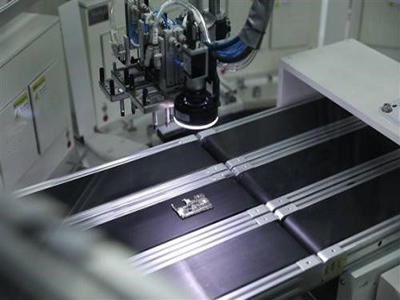
At present, the more common industrial robots in the mobile phone production line include 6-axis robots, Scara robots, AGV logistics robots, desktop soldering and dispensing robots. 6-axis robots are generally used for handling and grinding, Scara robots are commonly used for assembly (especially screwing), and AGVs are used for handling and warehousing. Dispensing and soldering desktop robots are used for dispensing and soldering.
The more widely used processes of the robot are dispensing and screwing, these two processes are relatively simple to operate, even if the mobile phone is updated frequently, as long as the corresponding system parameters are changed, it can continue to be used. The grinding of mobile phone cases has high requirements for accuracy and effect, and the arc and wiring of grinding are very important indicators. The application proportion of assembly robots in the mobile phone automation industry is low, and the dependence of assembly lines on skilled workers is relatively large, but the automation transformation of assembly lines is of great significance for improving the production efficiency of enterprises.
The existing problems of automation in the mobile phone industry:
(1) Flexible problem Now there are more and more types of mobile phone products, and the demand is more and more personalized, which contradicts the standardization and scale of robot production.
(2) The problem of return on investment The cost of automation is high, and the sales and profit problems of mobile phone brands are uncontrollable, especially with the popularization of smart phones, the profits of mobile phone manufacturing are getting weaker and weaker, and the return on investment is especially concerned by mobile phone manufacturers. This problem is closely related to the problem of flexible production, can not achieve flexible production, automation equipment is difficult to achieve large-scale effective use, smart factories are more difficult to achieve, the frequency of line change in the mobile phone industry is about 6 months to 8 months, and the return on investment cycle of automation equipment generally takes one to two years to be effective, if the return on investment cycle of the whole line of automated production is longer, the survival of small and medium-sized mobile phone foundries is a problem.
(3) Cross-border integration problems There is a strange phenomenon in the industry, many manufacturing enterprises do not purchase automation equipment, but actually do their own semi-automatic or automated equipment. The reason for this is that the manufacturing of automation equipment should conform to the company's production process, and the production process is the key to the company's competition.
Industrial Robot Industry Survival Survey
Analysis of the current situation of the industrial robot industry
Related Article


