


The Current State and Future Trends of Facial Recognition Technology
Facial recognition technology has gained significant attention in recent years. But what is the real state of its industry, and where is it headed? Let’s delve into the details.
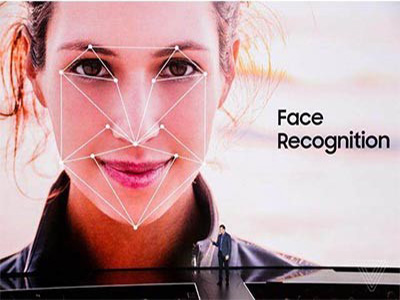
- The Gap Between Real-World Applications and Experimental Results
While facial recognition technology has been applied in fields like finance and security, its real-world performance often falls short of laboratory results. For instance, a university implemented facial recognition for morning check-ins, but due to the slow response time, students were still waiting in line by midday. This gap in performance can be attributed to various physical factors in real-world settings—such as lighting, angles, focus, and the distance between the person and the camera—that lead to lower image quality. These images are then transmitted over networks for comparison and recognition, a process that can be slow, thus diminishing the actual effectiveness of the system. In most cases, the quality of images captured in real-time is far inferior to those used for training.
- The Need for Higher Testing Standards
During experimental testing, images are typically of high quality and captured from direct frontal views. However, in real-world applications, the images collected may be of only partial faces and of lower quality. Therefore, the standards for real-world applications must be significantly higher than those used in training.
- The Discrepancy Between Training and Real-World Performance
In most cases, real-world performance lags behind training results. Many computer vision companies boast training accuracies of over 99%, but this does not equate to a 99% success rate in real-world applications. In complex industrial settings where facial recognition is used for tasks like blacklisting (1
Future Trends in Facial Recognition Technology
As the artificial intelligence industry continues to grow and develop within the context of information technology, cloud computing, and big data, the applications of biometric technologies like facial recognition are expected to expand. Several key trends are emerging:
- Network Integration
Facial recognition addresses a fundamental need for identity verification in daily life. Moving forward, the results of this identity verification will increasingly be integrated with various industries and shared through the Internet and the Internet of Things (IoT). In simple terms, the trend of "identity verification + IoT" will become more prevalent in the future.
- Integration of Multiple Biometric Modalities
Current facial recognition technology has not yet met human expectations, especially in industries with high-security demands, such as finance. Facial recognition systems can be vulnerable to identity fraud by malicious actors. Therefore, the integration of multiple biometric identification technologies (such as liveness detection, iris recognition, etc.) will be necessary to enhance overall security.
- Cloud Technology
Cloud technology will significantly support the data and computing needs of facial recognition applications in the future. Cloud-based access control systems can manage hundreds or thousands of entry points simultaneously. With the widespread adoption of IoT, users will be able to remotely control and manage access points from any location, ensuring accurate personal identification. This will be widely applied in enterprises, schools, training institutions, large commercial venues, and office buildings.
Security Risks Associated with Facial Recognition Technology
Facial recognition, like iris recognition, faces issues related to replicability. Since our faces are constantly exposed, it is possible to capture and replicate someone’s facial features through photos. Another risk is instability. Factors such as heavy makeup, allergies, injuries, or cosmetic surgery can significantly alter facial features, affecting recognition accuracy or rendering the system unable to recognize a person at all.
As a nascent technology, facial recognition, much like other security-related technologies, will face malicious attacks from criminals. It will require continuous improvement in technical capabilities and protective measures in response to these threats. Similar to combating computer viruses, the ongoing battle between attackers and defenders will drive the technology toward better and more secure solutions.
In-Depth Analysis of the Current State of the Machine Vision Industry
How to Avoid Being Replaced by Artificial Intelligence
Related Article


